February 5, 2012

A Look Back at Africa in 2011

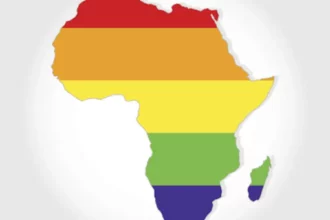
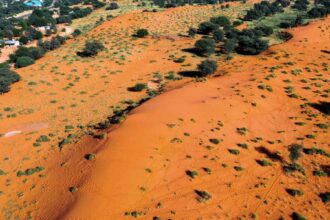
Satellite image of Africa, showing the ecologi...

Image via Wikipedia

2011 was an eventful year for the continent of Africa, not least because of the wave of protest movements that was launched in Tunisia and then spread all over the world in various forms. Below is a roundup of some wonderful happenings on the African continent that you may have missed.


NORTHERN AFRICA
Algeria opened its first underground rail system in the capital, Algiers. The only other underground rail in Africa is in Cairo, Egypt. Tunisians peacefully deposed long-time president Ben-Ali and held elections to usher in their first democratic government. Well done, Tunisia! Uprisings in Egypt and Libya also led to a change in executive leadership in both countries, although in less peaceful ways than the Tunisian transition. Other North African governments, most notably Morocco, scrambled to give the people more of what they want, in order to avoid similar uprisings in their own countries.


SOUTHERN AFRICA
Miss Angola, Leila Lopes, was crowned Miss Universe in September; the Kingdom of Lesotho keeps taking giant steps towards gender equality and is ahead of some Western countries; and Zambia generated a lot of buzz all over the world due to the appointment of its first white Zambian as Vice President. In South Africa, paint factories run by our ancestors 100,000 years ago were unearthed. They demonstrate how forward thinking our people were.


EASTERN AFRICA
In Rwanda, Gregory Tayi has pioneered renewable energy by building small hydro-electric stations on some of the country’s rivers to provide electricity. Tanzania hosted its 4th annual Swahili Fashion Week to mark 50 years of independence and promote East African designers; a few southern African designers were also invited to participate. The Republic of South Sudan, Africa’s newest nation, was finally born after years of struggle. And if you haven’t heard, Ethiopia now has one of the fastest growing economies in the world.


WESTERN AFRICA
Angelique Kidjo, the amazing singer from Benin, continued to be an Ambassador for Africa as she entertained audiences around the world. Cape Verde graduated from the list of Least Developed Countries to become a middle-income country, and its President, Pedro de Verona Rodrigues Pires, was awarded the Mo Ibrahim award for African Governance. Cape Verde is a nation without corruption, and one of Africa’s success stories.
Mali celebrated African photographers at the Bamako Encounters in November. That same month the Paris Photo international fair was dedicated to Africa. Meanwhile, serial entrepreneur Magatte Wade, is redefining Senegal’s (and Africa’s) place in the world through manufacturing.


Ghana gets tougher on Climate Change

Ghana as a nation has taken various steps towards mitigating the effects of Climate Change. In the past couple of weeks, various activities and achievements have drawn the West African nation closer to the awareness of Climate Change. On the 17th and 18th of November this year, SpotOne Global Solutions Group in collaboration with various stakeholders organised a 2-day workshop in Accra to bring to light the effects of Climate Change and how technology can assist the citizenry in various ways.

The Apps4Africa event also introduced a competition to the developer community, offering it the chance to come up with innovations which can be leveraged by the nation it its quest to solving its Climate Change challenges. The winners of the competition were announced at a specially held function in Durban. Ghana’s farmerline placed 3rd behind Senegal and Nigeria. The Apps4Africa was attended by the Mayor of Accra, Alfred Vanderpuije who is reported to have promised an end to the perennial Accra floods tormenting the capital city middle income nation.

A few days ago, in Ghana, the Minister of Environment in Ghana disclosed the government’s intentions of being more strict on over-aged cars as a way of decreasing emissions in Ghana. This is a announcement by the Minister comes weeks after Executive Secretary of Energy Commission, on in June called for collaborative efforts by all stakeholders to enforce the ban on importation of used refrigeration equipment into Ghana. Due to the socio-economic standards of the people in Ghana, these bans will take sometime to take effect.

Top 10 sources of news and comment on Africa in 2011


It is undeniable that the media is the mirror through which we look at ourselves and the lens through which we see the world around us. Whether it is broadcast, print or digital, the media is second only to first-hand experience, in shaping our world view.


Yet so much of the media is devoid of international reporting and that little that exists is often a vacuous repetition of tired stereotypes. The popularity of the New Yorker’s post on the top ten positive stories about Africa in 2011 confirms that there is plenty of appetite for something other than the Western media’s mantra of death, destitution and desperation in Africa.


So as 2011 makes way for 2012, I set myself the challenge of finding 10 media sources that have bucked these trends and pursued to varying degrees a more inclusive and balanced policy on reporting Africa.  You will certainly think highly of others that haven’t made the list, so add to the comments those who’ve most impressed you with their coverage of Africa and developing world issues.


  1. Al Jeezera

Whether you think Al Jazeera reckless for broadcasting information for which sources cannot always be validated or you think them biased in their reporting, there is no denying the organisation’s significant role in covering the Arab Spring and subsequently, their commitment to covering Africa in news and blogs. I’ve been impressed by Al Jazeera’s use of citizen journalists and interest  in how social media can be used in news reporting: in April, Al Jazeera launched The Stream, a web show which curates its top stories from its online community.


  1. Global Voices

Into the void created by shrinking international coverage by the mainstream media, Global Voices put citizen journalists – bloggers to tell their own stories – and works hard so that quality isn’t compromised. Their efforts to cover the stories that elude the mainstream, are exemplified in their coverage of the recent elections in Cameroon. To much of the media, Cameroon means only two things: football and a lion-maned first lady. Yet Global Voices coverage reminded readers that Cameroon is a bilingual country, run by a media-shy dictator (one of Africa’s longest  standing) and  has complex geopolitics that show the destructive legacy of colonialism.


  1. Mail and Guardian

It’s not only Western media that portrays a one-dimensional Africa, media across the continent also perpetuates the ignorance that so often leads to xenophobia. But South Africa’s Mail and Guardian has decided to show how Africans live, not just how they die and has resurrected its African Voices series. Describing the series, the site says: “Our essays are written by Africans about life in their Africa – ordinary people getting on with their own lives, often in the face of adversity. These stories aim to give us glimpses across the fence into the daily lives, loves and frustrations of our neighbours on the continent that go beyond the usual headlines.”


  1. Christian Science Monitor

CSM might not be as well known as the New York Times or the UK Guardian but its insightful reporting, quizzes and multimedia galleries  helped readers gain a more balanced view of Africa and the role the continent plays in the world. Its feature, Africa Rising, looks at the business, investment and development trends and is now focusing on Sierra Leona . This is one media company that doesn’t rely on the clichés one of its correspondents, Jina Moore, points out in her blog post on reporting African elections.


  1. 5.      The Guardian’s Global Development desk

Continuing its commitment to development reporting after the Katine Project, is the Guardian’s Global Development desk. The site doesn’t just report on Africa nor does it, in my opinion, sufficiently engage with the communities its content is about but perhaps that’s not the point. As a platform for aid workers, Global Development is excellent and with new forays into providing foreign language content, it’s relevance to the development community will only continue to grow.


  1. BBC Africa

The BBC and its World Service, the world’s leading international broadcaster was not been spared in the coalition government’s budget cuts but its Africa flagship comment show, BBC Africa have your say (HYS), have managed to evade total demolition. Taking a page from The Stream’s book, social media will play a central role in both how the HYS team chooses its stories and how its audience interacts with those stories, while BBC Africa has maintained a respectable mix of news, comment and multimedia content, reflecting both the complex stories and struggles and the rich diversity and opportunities on the continent.


  1. Pambazuka News

Describing itself as an “advocacy tool for social justice, designed specifically for those working in Africa”, Pambazuka News has for ten years been publishing comment and analysis about Africa from a group of contributors that are as diverse as the issues it covers. It’s content is also available in Africa’s three main official languages: English, French and Portuguese.


  1. See Africa Differently

It’s known that I’m not the biggest fan of Comic Relief’s annual fundraiser, Red Nose Day, but the charity has sought to balance its portrayal of Africa with a site that for its cheeriness alone deserves a mention. See Africa Differently recognises that young people are both the change makers of tomorrow and those most interested in a new narrative about Africa today and using social media and social networks to reach its audience with positive stories and facts about Africa.


  1. 9.      IRIN and Reuters Africa

In joint ninth place, these two news sources can be counted on to cover both the well known countries and Africa’s more obscure nations.


  1. Next

Next is new to me but was recommended on Twitter by AfriPop‘s editor Phiona Okumu. I’m certainly not in love with its style (the subheadings under world news are “development, disaster, economics, politics and war”) but this Nigerian publication seems very much to reflect the aspirations of modern Nigeria: it’s big and bold and looking to compete par for par with the best of the world’s press.


So there they are. My top ten. But the list would not be complete without mention of the blog Africa is a country, “a media blog that is not about famine, Bono or Barack Obama” – what’s not to like? Or indeed Connect4Climate, which I concede is a campaign not a media site but gets a mention for the efforts to use social media to bring to a global audience, the stories of what climate changes means to Africans.

Enhanced by Zemanta

Zimbabwe PM must gird his loins

The last two weeks have witnessed media frenzy over Zimbabwean Prime Minister Morgan Tsvangirai’s private life.
State media claims Tsvangirai paid a handsome US$36 000 as a bride price for his groom, with the marriage set for next month.

English: Morgan Tsvangirai ‪Norsk (bokmål)‬:...

Image via Wikipedia

But the prime minister’s aides have been quick to dismiss the whole marriage as a sham, arguing that this was an elaborate honey pot plan by state security agents to discredit Tsvangirai.
They argue that he only paid US$10 000 as “damage” for impregnating a woman out of wedlock. Damage is a form of compensation for impregnating out of wedlock, I stand corrected here, but it’s paid for the first pregnancy only.
I will not seek to enter the debate whether he paid a bride price or just damage, but my message is Tsvangirai must gird his loins.
Since the death of his wife two years ago, Tsvangirai has lurched from one sexual controversy to another and that isn’t doing his public image any favours.
Early this year he was embroiled in another sex scandal after it was claimed that he impregnated a 23 year old woman who, because Tsvangirai was no longer funding for her upkeep, was demanding maintenance, threatening to go public.
It is claimed that Tsvangirai made a hasty retreat, paid the young lady, bought her a flat and promised to look after her. But this is not before his aides repeated the all too familiar line that their boss was part of an elaborate scam to discredit him set in motion by state security agents.
Tsvangirai has spoken widely (presumably with a forked tongue) about HIV and Aids but he himself has gone onto to do indulge in unprotected sex with multiple partners. A classic case of our leaders saying one thing and doing another.
Zimbabwe and southern Africa have some of the highest HIV prevalence rates in the world and the premier must know better.
The prime minister was again in the news after he was said to be dating a married woman from Zimbabwe’s second city, Bulawayo and her husband was suing for divorce. Denials of the affair flew in left right and centre, but for the discerning mind, a clear pattern was developing.
Again Tsvangirai is at the centre of a storm over another relationship he is said to have wrecked. The prime minister reportedly wrote to one Harare woman informing her that she had a “significant part of his heart”. State media claims that the lady’s boyfriend has used for adultery.
The truth of the said correspondence has not been independently verified. Then there is a woman who lives just outside Harare, the capital, who at some point thought she was the chosen one. She and the premier reportedly have three kids together.
At one time Tsvangirai was reportedly seeing an American based Zimbabwean doctor and they even attended South African president, Jacob Zuma’s inauguration together. But there were no wedding bells within earshot.
Recently Tsvangirai told a meeting of his supporters that he would not be getting married anytime soon; he strikes me as a man who still wants to play the field.
While the easy way out the messes that he creates for himself is to claim that he is the victim of a sting operation, there shall come a time when this will not stick.
The only way his enemies can plan such elaborate plans to discredit him is because they have realised that he has a weakness, and like the Biblical Samson, women may just be his downfall.
His supporters may also claim that this is a private matter and the media should not be involved. But the man is a public figure, who lives on tax payers money and as the public we should be worried, in fact very worried, when our leader cannot take charge of his private life, which is smaller and obviously less complicated than leading a nation.
Tsvangirai has a lot of goodwill; he is seen as a brave man who has stood up to long time ruler President Robert Mugabe and for this reason people tend to look aside at his transgressions.
Only murmurs will be raised here and there, but Tsvangirai will remain largely unscathed. Maybe it is true, after all, we get the leaders we deserve.

Enhanced by Zemanta

Africa Rising in the Tech World

I recently watched a couple of videos that show how African innovations in technology are influencing the rest of the world. In the first video presented at TEDx Vienna, Alexander Oswald uses numerous examples to show “why Kenyans do it better” when it comes to mobile solutions. The video is worth watching to see how “the scarcity of resources brings the best out of people.”

I cannot remember how many hundred times I heard the saying in Kenya, “Necessity is the mother of invention.” Africans are some of the most innovative people I know. When I was growing up in Kenya, most people couldn’t afford to buy the latest technology, but they would still find a way to meet their needs by inventing something from the meager resources available to them. Watch this video to see how simple mobile solutions are changing the face of Kenya and teaching the developed world the art of simplicity.


The second video is a presentation by American Erik Hersman who spent part of his childhood in Kenya, and now lives and works in Kenya. He challenges the world to discard its outdated view of Africa as an impoverished continent (we’re not even talking about the people who consider Africa a country!) full of starving people and warring factions. Erik tells the story of the Africa you hardly ever see in mainstream media: Africa as a rising tech power.

Africans are intellectually active, curious, aware and making their mark on the world with their innovations. I celebrate that.
In the words of Erik Hersman, “[The West] shouldn’t be trying to make Africa more like us, …we should be more like Africa.”

Enhanced by Zemanta

Africans Immigrants In Th US: Making The Grade, But Not The Jobs

KBTC graduates

African Graduates (no location information provided)

Africans immigrants to North America are always presented as hard working, friendly, education-focused minorities that adapt well to their new host countries. This image of the hard-working African immigrant is often presented as a stereotype that is in contrast to U.S. born African (Black) Americans.  In fact, the majority of Africans come to the U.S do come for the purposes of education more than any other reason. This has led to a situation where more than one-third (36.6%) of African immigrants to the U.S. have a bachelor’s or higher degree”. When it comes to education, African immigrants as a group have a higher education rate than immigrants from the West Indies, Asia, and Europe. When compared to U.S. citizens more Africans in the U.S report having a college degree than U.S. born minorities (Asian, Latino, and Black Americans).  Africans in the U.S. are doing significantly better in educational attainment rates where 36.6% have a bachelors degree compared to 29.5% White Americans who are also the privileged majority and have the most access to the power institutions in the U.S.  Marriage rates for Africans were also similar to White Americans too (marriage typically indicate higher income). Similar trends can be seen in Canada and the U.K. Many Africans use education as a means to finding work and ‘improving their lives’. One would assume that having high educational achievement levels would mean an increase in economic factors for African immigrants to the U.S. However, recent studies show the opposite.


Contrary to popular belief about affluence levels for African immigrants in the U.S., a recent study has concluded that Africans in the U.S. are currently not doing significantly better than other immigrants overall, Black immigrants or U.S. born citizens (Black, Asian or White). In the Mason and Austin (2011) study, “The Low Wages of Black Immigrants: Wage penalties for U.S.-born and foreign-born black workers”, the study concludes that Africans in the U.S are not fundamentally better off than all other groups including African-Americans. It also concludes that Africans are economically more similar to African Americans. The rate of Africans falling into poverty in the U.S. is more similar to that of African-Americans. Lastly, it concludes that unemployment rates for this demographic are similar to that of African Americans. Africans in the U.S. are also currently earning lower wages then African Americans. Whilst Africans are doing better than African Americans in terms of poverty, unemployment, and marriage rates, it is not significantly better. Despite high education rates for Africans, economic factors aren’t tallying up.

One explanation for this is that Africans still continue to face discrimination in the U.S. because of color (‘race’), and perhaps nationality. The recession also affected this. In an article that appeared in the Huffington Post, “Foreign-Born Blacks Hit Hardest Of All Immigrant Groups By Jobs Crisis” it was reported that the U.S. recession that began in 2007, affected all Black people in the U.S  because they faced similar discrimination in the job hiring process. For Africans, discrimination in terms of wage/salary and job hiring was worse than that of African Americans. There has been increasing unemployment for Africans too. By 2009, greater numbers of African immigrants than any other group lived in a household with an annual income below the federal poverty line. The Migration Information Source reports that based on the U.S. census, the majority of Africans in the U.S work in service occupations like construction, extraction and transportation (30%), compared to 12.5% that work in management, business, and finance professions that pay more. This suggests that despite high education rates, Africans are getting jobs that are not reflecting their qualifications and/or that they are overqualified for. The difficulties faced in legal immigration and/or obtaining work permits may help explain these patterns as well. It would also be beneficial to access other obligations that may contribute towards Africans living below the poverty line like obligations in their home country.  This may include contributions towards buying assets, homes, businesses, or other investments and funding education for relatives. Although the Mason and Austin (2011), suggests that the prominence of the African degree may be one reason as to why Africans are not getting higher jobs, it is important to note that many Africans do get in to Masters/Phd Programs with African degrees. In a small poor country like Malawi as an example, many Malawian doctors and nurses are recruited overseas with their Malawian degrees. As an example, there are more Malawian trained doctors in Manchester, U.K than in Malawi itself. Education has always been important to Africans, and it is seen as a ways to upward mobility. For many this has been the case, but as immigrants to new countries, Africans will still always face the same levels of economic discrimination that the native born minorities face. Over time, we will need to continue to monitor data to see if factors for second and third generation Africans will converge with those of native born Black minorities.

Enhanced by Zemanta

Strikes : Negotiations or Blackmail?

For a week now,  Kenyan University Lecturers have been on strike demanding better pay and fresh recognition of their contribution to society.

This has been in the wake of a  somewhat successful strike by the  Kenya National Union of Teachers (KNUT) over similar grievances. The non medical staff of the country’s largest referral hospital had also gone on strike in the same period though their issues were sorted out in lightening speed.

In the whole cacophony, the gravest sufferers were the Students who really have nothing to do with paying lecturers and teachers fairly.  The government was thus forced to bend to the union’s (KNUT) demands because they were timed in synchrony with the schools opening period thus putting both the parents and aspiring candidates for the national exams in undue stress and strain both financially and psychologically. This can only be called blackmail.

Similar tactics are being employed by the University Unions in agitating for what they deem as their rights.

Next month public service doctors also plan on striking.

Only Time will tell if these tactics will prove to be the tried and tested ways of getting your fair share from the Government.

Enhanced by Zemanta

Ghana discusses solutions to its climate change problems

source Unknown

The propagation of the Climate Change message has been my main goal for the past couple of days on various social media networks. Dedicating my birthday to the subject of Climate Change is just about the least I can do to bring to light the challenges we face as a continent. Africa has seen draught (this year’s was the worst in 60 years), famine, flooding and so on. It is obvious not much has been done to bring to light what we can do as one race to mitigate the challenges we face or may face in the future.

Today and the day after Marieme Jamme, Amma Baffoe and I will be setting up a platform for various stakeholders from academia to civil society to come together and discuss some practical solutions to some Climate Change challenges we have faced in the past. The two day event is supported by the Accra Metropolitan Assembly (AMA), the US Department of State, Spotone Global Solutions, Hive Colab, Ted, Ideo among others sponsors. This evvent will be held at the Ghana-India Kofi Annan Center of Excellence (KACE) with the Mayor of Accra and the Director General of KACE leading the discussions on the search for practical African solutions to our African problems.

The other side of this event is the Apps Competition which has the core objective of motivating developers to create innovative technologies which will in one way or the other educate African on Climate Change or help curb effects of Climate Change. It is important we bring to the dangers involved in Climate Change as well as throw in solutions which can and will avert such havoc. The draught in the horn of Africa killed thousands, the recent floods in Accra affected lots of properties and now what we need to do is to commit our efforts towards mitigating these effects in the immediate future and years after.

Follow me on twitter today, @ttaaggooee and join in the climate Change conversation as we brainstorm and share ideas on preventive measures.

Enhanced by Zemanta

Back to School Blues: Zimbabwe gets the Dunce’s Cap

Recently, the Mo Ibrahim Foundation published its extremely comprehensive rankings of African governance providing a pretty interesting insight. On their web site, the Foundation indicates that it compiles its measure of ‘effective delivery of public goods and services to citizens’ from no less that 86 indicators and from 23 data providers. Saliently, Zimbabwe is not doing too well. Out of the 53 African countries surveyed, Zimbabwe ranks 51st. That is shocking, though not surprising.

The categorisation of governance into four principal areas and Zimbabwe’s ranking therein must surely be a cause for concern. Principally Zimbabwe ranks second last in the category “Sustainable Economic Opportunity”. This surely cannot be too proud a moment for Zimbabwe’s leadership, beating only Somalia (score of 3.6/100 versus Zimbabwe 24.5) as the worst country in Africa within the category. The sorriest sub-category is apparently Zimbabwe’s business environment – ranked 52nd (scoring a mere 9.3 %) – perhaps a true reflection of government’s racist and xenophobic policies angled towards indigenisation. With a per capita GDP of just US$131, one may guess, one should not expect more.

In the category “Safety and Rule of Law”, Zimbabwe steps up to 51st place with a score of only 28.2%, whipping the two bad boys in the class, Sudan (21.0%) and rotten Somalia with 4.8%. Not surprisingly within the category Zimbabwe ranked poorly with respect to Accountability, but also a very low score for “Personal Safety”. That latter score needs to be opened up a bit, since for all intense and purpose Zimbabwe is a peaceful country, except when it seemingly spills blood in election campaigning mode. The nation has not had elections recently, but reported incidents of party political violence continue to sully the record.

FlickrHarareFirst

The nation is ranked 47th in the category “Participation and Human Rights” and 42nd in “Human Development”. It is not all bad, Zimbabwe did not do too poorly with a sub-category labelled “Infrastructure”, but then we know Zimbabwe inherited one of the best structured nations in Africa, probably only second to South Africa at the time, from its Rhodesian or perhaps colonial benefactors. Zimbabwe ranked 15th for Infrastructure. Encouragingly, Zimbabwe ranked 24th in Africa for Education. Top scores in the survey, for Zimbabwe, were in the categories Health (56/100) and National Security 55%. Those are the only two subjects passed!

Zimbabwe’s overall score card is a sad 31 percent, which in most of our books is a failure, it is well below the African and the regional Southern African averages, and has been for the last few years. Clearly, it is back to school for Zimbabwe. The nation should not object to wearing the dunce’s cap and standing in the corner, but the fact is there is no headmaster nor wicked teacher to punish not so sparingly with the rod.

Political self criticism is just too suicidal in Africa, no politician can do wrong, so it will be up to the people to bring about change. The problem is that the people don’t see these indicators as a measure of success or failure, it is they who are getting the stick from those who should be sanctioned for this abysmally poor performance. Does anyone care?
_______________
Source:
Mo Ibrahim Foundation – www.moibrahimfoundation.org

Enhanced by Zemanta

Meltwater Incubator is taking the African tech scene by storm

Streetvendor in the streets of Accra, Ghana, W...

Image via Wikipedia

Created in February 2008 by the Meltwater Group Founder and CEO, Jorn Lyseggen, the Meltwater Entrepreneurial School of Technology (MEST) has grown to attract the attention in the Ghanaian tech space. Born out of a dream and a goal to train the next generation of Ghanaian graduates and in software development and Entrepreneurship, the organisation has in the past few years churned out graduates and trainees with outstanding achievements. MEST is a two-year training programme for Ghanaian graduates funded by the Meltwater Foundation. After the training the graduates have the chance to pitch to the Foundation for funding after which they’d join the Incubation phase of the programme if successful.

In February this year, three of the Incubator’s start-ups got the opportunity to exhibit and present their products at the first ever Launch conference in California. Nandimobile’s maiden product, Gripeline was in the end adjudged the Best Business Award of the Launchpad division. Weeks later, one of the founders of Retail Tower, another Mest start up won the top prize at the Google Ghana event held in Accra. Isaac Nortey got a Samsung Galaxy in recognition of his exhibition of knowledge in Google’s technology and services.

This year, a team of MEST trainees competed with the rest of the world in the World Youth Summit Competition in which their maternal mortality portal was a winner in the Fight Poverty, Hunger and Disease category. This was a few weeks after their counterparts emerged semi-finalists in the Google Online Marketing Challenge.

One other achievement worthy of recognition is Alfred Anyan, the ultimate winner of Mobile Web Ghana’s first pitch. Alfred is a graduate of the MEST and currently manages his own technology company.
Following these achievements, Saya Mobile and Nandimobile picked up the top prizes at the first ever Ghana Mobile Showcase sponsored by Indigo Trust and Inmobi.

Currently there are seven tech start-ups in the Meltwater Incubator. 2011 only seems to be the tip of the iceberg, more innovations are expected to be introduced come next year.

Enhanced by Zemanta