May 18, 2012

What’s in a name

I have been following the trial Conrad Murray trial, recently convicted for killing pop star Michael Jackson, and I was intrigued at the number of times the word Propofol was mentioned.

The singer is reported to have had an overdose of the anaesthetic drug leading to his death a few years ago.
What came to my mind first was that I will not be shocked in the next few months that some parents in Zimbabwe might name their children Propofol, yes Propofol. While this may seem like a joke, Zimbabweans have an odd way of christening their newly born children.

Strangely, Zimbabweans have a love for the English language and next time you meet someone with a rather odd English name, ask him which country he is from and don’t be surprised he is my country man.

As they say, charity begins at home, so I will begin by giving examples of some rather odd names in my family. My eldest uncle is called Nevermind, Never for short. My grandmother says he was born at a time of distress, as her and my grandfather were constantly fighting and the name was meant to communicate that she didn’t mind and could cope on her own without her husband.

They split up a few years later.

I also have an aunt called Easy, I have no idea who named her or what was going on during the time of her christening, but that’s certainly a name I am not going to give to my child.

Someone recently told me that they grew up with a neighbour whom they simply referred to as “Tom”. It was only years later that they discovered that the person’s full name was actually Symptom. Oh my gosh, what kind of a parent names their child that.

My favourite name though should be that of a newspaper analyst, his name is Psychology. Probably his parents were prophetic and wanted their sons to be a psychologist or something or maybe they were just intrigued by a term they thought was a jawbreaker.

Zimbabweans seem to have a complex that the better English you speak the more educated you are, they are contemptuous of people who cannot speak the Queen’s language fluently. So I think for us it follows that English names mean sophistry and intelligence of both our parents who named us and also for us the children, who carry those strange names like crowns on their heads.

I have one name, an Ndebele one (that is my tribe), but I often get people asking me if I do not have another one. The feeling I get is these people are just not satisfied with just one indigenous name, I need to have an English so I can fit in.

A cursory glance will reveal that most people with such names actually grew up in rural names and a person who attempted to speak or was at least fluent in English was exalted in that area. A one eyed man in the land of the blind, if you like.

So a child with an English name, never mind (that word again) how ludicrous it was, was seen as the child of sophisticated parents. As for urban folk, really am still trying to get a reason why their children would have some of the strangest names on this planet.

One of Zimbabwe’s top athletes is called Young Talkmore Nyongani. Really if I worked at the birth registry I would propose a jail term for any parent who even dared to burden their child with such names.

Zimbabweans also have a way of naming their children after historic or landmark events in their lives, but again they come up with weird names which only Zimbabweans can think of.

During the height of the economic problems, our government blamed all our ills on sanctions imposed by the west. And yes, you guessed it some family named their unfortunate child Sanctions, guess as a reminder of the tough times we went through.

During that same period, fuel was scarce and was available to only a few who could lay their hands on foreign currency and bought fuel coupons in advance. Fuel coupons soon became a substitute currency and soon people were transacting using the coupons.

Needless to say, some family soon named their child Coupon and I bet when he is all grown up, his grandchildren would always be willing listeners as to how their grandfather got such a name.

There are several more strange names and I could never attempt to exhaust the list, but in the last few weeks I have met a man named Amend, I have spoken to another called Agree and like I said, I will not be surprised to hear of Propofol in the next few months.

Enhanced by Zemanta

The Beauty of the Kenyan Coast

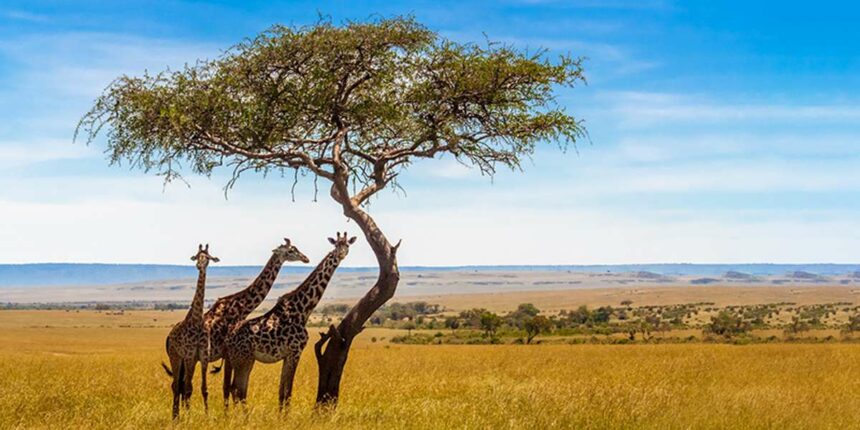
Even though we were still quite a few miles away from Mombasa, I could smell the briny air wafting in from the sea. We had made the nearly 300 mile journey from Nakuru by road. More road hours than we cared to count. Bathroom breaks. Notable scenery changes from the fertile highlands of the Rift Valley, to the savanna grasslands and flat-topped acacia trees of the Tsavo plains.Finally, finally, we approached the wide expanse of the Indian Ocean as we reached the Kenyan Coast.

Image courtesy of ownersdirect.co.ukI returned to Mombasa several times after that first trip as a preteen. The deep blue seas always called out my name and I answered, this love for water bodies having been passed down to me from my forefathers. I’ve stayed both on the North Coast and the South Coast (the city of Mombasa is an island, you see) and found that my heart generally gravitates towards the South Coast.

Driving down the main road in Mombasa, the huge tusks that arch over the street were amazing to behold. That first time, I wondered how big the elephants who had worn those tusks had to have been. Exploring the beautiful, mysterious waters of Malindi National Marine Park in a glass bottomed boat was my favorite experience of all time. So many wonderfully colored species of sea-wildlife: fishes, seahorses, sea urchins. Next time I go, I’ll try scuba diving.

Other places of interest in or near Mombasa include historical monuments (Fort Jesus, Old Town, the Vasco da Gama pillar and the House of Columns–the latter two in Malindi), the Gede ruins, the Haller Park animal sanctuary, spectacular geological formations at Hell’s Kitchen, the flora and fauna around the mouth of River Sabaki, coral reefs, and the Mamba Village, among others.

There’s so much to experience (not merely see) at the Kenyan coast, with the rich blend of cultures from its centuries of history: a conglomeration of Bantu ethnicities, some emigrated watu wa bara (Swahili for “people of the mainland”) and influences of Arabic, Portuguese and British culture. Really, I just couldn’t ever say enough good things about the intensely blue skies and seas, the white sandy beaches and the glorious days of fun possible at the Kenyan coast. No crowded beaches like you find in Western countries. If you haven’t been on a Kenyan beach, you haven’t really lived. So, two words for you: Go! Experience!

Enhanced by Zemanta

Grandfather For President: Why Age Limits Should Not Be Required for African Politicians (Part 2)

Ric Keller's Term Limtits pledge.

Image via Wikipedia

Questions about age limits seem simply to mask bigger questions of term limits and governance – we are arguing about the wrong issues and this deflects from more prominent ones. What we should be talking about is matters of enforcing constitutions, what a particular Presidents vision for the country is and most importantly, how they are going to execute it. Those should be the determinant factors in whether someone is electable, not age. We must not forget that as new countries in post independence Africa, many of the young leaders that came to power are the ones that became dictators – their failed visions for their respective countries weren’t largely determined by age, but by personalities. Presidents like Robert Mugabe are still in power in part, due to making mockeries of their constitutions. If our concern is creating an environment that enables dictators to run beyond the term limits, then this is the issue we should target by ensuring that our constitutions are not just fairy tales or show pieces. Mugabe has had term limits altered in the constitution in order to facilitate multiple terms. Now the debates in Zimbabwe centering on his age include trying to prove his age rather then addressing the constitutional amendments. He may not have had a chance to run again had he not had term limits changed regardless of what his real age is. Age is, and should be a non-issue. It’s simply a distraction from debating the real issue – manipulation or disregard of constitutional limits.

In post-Banda Malawi, an attempt to allow a third term for the first democratically elected President, Bakili Muluzi was effectively halted by the Malawi parliament and courts at the time it was brought to the forefront. This set precedence for the next President, Bingu wa Mutharika, who has indicated that he too plans on stepping down as well. Mutharika’s age was an issue during the election time, but whilst he was subsidizing agriculture for Malawian farmers during his first term, nobody cared about his age. Incidentally, Mutharika was re-elected and is now serving his second term at age 77. Term limits should be rigid and adhered to weather the serving president is considered good or bad so that the constitution becomes the supreme law and not individuals. If a Presidents term is particularity successful, this should not be seen as an opportunity to extend the term limit. If during a term limit a President’s governance is not what was expected then the constitution should provide for a process that will facilitate change as well.  If a person is 70 years old and still has the energy, acumen, and zeal to improve the conditions of their people, they should still be able to run for President. The real issue for Africa that we should continue to debate on is the person’s record and ability to govern not their age. As noted in “Grandfather For President: Why Age Limits Should Not Be Required for African Politicians Part 1″, we should not practice ageism unnecessarily, and perhaps at the detriment of finding another Mandela within our midst.

Additionally, for Africa, the issue of Presidential age has a further reaching cultural significance. In western cultures, the relationship between the young and old differs from African cultures; from a young age, African children are taught to respect and listen to elders in a profound way. Whether these elders are related or strangers, an elder holds a certain positive achieved and ascribed status in most African societies. This is reflected differently in various African cultural norms (ie some societies are traditionally organized by age-sets) and dictates how younger Africans behave towards the elderly. As an example, it would determine the greeting, handshake, body posture, gaze, conversation or other interaction that one would have with the elderly. In the U.S, the nomination of Republican candidate John McCain (particularly after Dick Chaney’s tenure as Vice-President) was a highly problematic for the republican campaign. In part, this is a reflection of a problem of ageism towards baby boomers in a graying America and general cultural attitude towards the value and mental acumen of elderly in that country.  I wondered to what extent decisions to include this information by western (or African) journalists and the continuing debates about age in African politics was a reflection of attitudes towards age in the global North.  For African countries, the arguments surrounding legislating age restrictions for ageing presidential candidates are more centered on preventing brutal dictatorships or poor governance. In African societies were the wisdom and guidance of elders is respected, tackling issues of age and politics proves problematic when it comes to dealing with long serving bad leaders who’s constituency no longer thinks is wise. Although it seems that setting an age limit for presidential candidates is a simple solution, for most African countries, this solution has far reaching dynamics. We need to focus our energy on term limits which would prevent presidential candidates from running and winning indefinitely. It deflects upsets social codes of behavior, deflects attention from setting term limits, and keeps us from debating other issue of governance which should be central. If a President builds schools in your villages, does it really matter what age they were when they built it? Similarly, can that President still not build schools outside of office?

Enhanced by Zemanta

The World’s best diet

Uglai and cabbage. Ugali (also sometimes calle...

Image via Wikipedia

A few months ago I watched a TV programme entitled the world’s best diet. The show featured presenter Jonathan Maitland and  a celebrity spread of made up of Linda Robson, Cheryl Baker, Darren Gough and Carole Malone. Whilst I wouldn’t argue that some of the destinations, for instance, Japan, offered the worlds healthiest lifestyles, I was somewhat disappointed that nowhere in the programme was any part of Africa featured. I cannot blame anyone for this, as much as we would like, Africa in terms of its food still presents itself as the dark continent, where no light has been shed on some of the best recipes it can offer.

Additionally, for those recipes that have emerged as familiar, they do not exactly come across as the healthiest, even to people of African origin. I remember having a conversation with another African lady at a recent ethical fashion event about presenting an afro centric diet as a healthy living way of life. Her immediate comment was, “well, African food does not strike me as healthy.” In today’s post I wish to challenge this idea. The only way to do this is through educating readers out there and letting them know that if we examine African staples and tweak them here and there, we are actually in the running to provide one of the world’s healthiest diets.

Let us examine a very popular dish which one would find easily across east and southern africa. ‘Ugali, irio na nyama’ in other words solids made of maize, millet or sorghum meal, green vegetables such as spinach or the truly divine covo and meat or fish. With the ugali rich in fibre, greens rich in iron and grilled river tilapia rich in healthy protein and some omega 3, you are well on your way to a healthy diet. Take another recipe which is made up of our popular stew. Stews are normally tomato based, with onions, garlic and ginger. Why this comes across as vastly different to pasta sauce, an Italian staple, (Italy ”Mediterranean” featured as healthiest diet destination) is beyond me. We only fall short in the preparation of stew, where too much oil used is not uncommon.

Apart from all of this, the afro centric diet abounds with fresh or naturally preserved ingredients. You seldom hear of a diet rich in fast or highly processed foods. And even better is our use of indigenous plants and herbs as natural remedies. There are remedies for controlling diabetes and high blood pressure (dawadawa), cholesterol and even malaria treatment. All of these could benefit from additional research but they have been used for 100′s of years and need not be suddenly “discovered” by some witty Oxbridge scholar, we already know about them.

Follow this link to read more on a recipe of interest to you or like us on facebook.

Enhanced by Zemanta

Goat Kebabs: from the Afro Centric Diet series

Fresh cleaned mutton (castrated male goat meat...

Image via Wikipedia

Well, I would categorise this dish as intermediate to difficult. Even though it really could be easy, it is time consuming therefore be prepared to get up close and personal with your kitchen. I remember this as a favourite at the parties my mom used to throw way back when we were kids. The time and effort put into making these kebabs is well worth it. Here goes.

1kg goat meat
Onion
Garlic
Ginger
Chicken stock
Scotch bonnet pepper
Optional Spices (cloves, bay leaf)

I like to cook goat with a lot of spices, seasoning and bulb vegetables like onion, garlic and ginger to tone down the natural scent if goat meat. Cook until tender. When pressed for time like I often am, I pressure cook the meat and it is done within 15 minutes at pressure.

While the goat is cooking, work on the sauce, which is essentially the tomato stew base I blogged about in my last post. For the kebabs, I like to use fresh tomatoes for their natural sweetness instead of the canned ones which can sometimes have a sour taste.

1 large onion
Garlic
Ginger
Scotch bonnet peppers
1 tbsp tomato puree
4 large fresh tomatoes
Olive oil

Follow the instructions for the tomato stew base ensuring that the resulting sauce is quite thick, not watery.

Now, the meat should be done. Traditionally, the next step would be to deep fry the meat. I have been moving away from using too much oil in my cooking, so at this stage I actually grill the meat until sealed and browned on the outside yet juicy and tender on the inside. It is now time to assemble your kebabs with the following.

1 red onion
Colourful peppers
Freshly sliced tomatoes.

Chop all of these to about an inch each side. Take your bamboo skewers and begin to assemble the kebabs, alternating meat and vegetables. Each kebab ending up with 3 to 4 pieces of meat is fine.  Now drizzle the spicy tomato stew base all over the kebabs ensuring every inch of meat is covered and they are ready to serve.

Bon appetite!

For more step by step photos, click here.

Enhanced by Zemanta

Spicy Moroccan Style Chickpea and Couscous

I love eating good food (who doesn’t?!). I love spicy food too and although I believe I may be secretly addicted to chillies, this particular recipe has none.  As much time as I seem to spend in the kitchen preparing meals, treats, cakes, breads and so on, I have to confess that I am also a lazy cook.  I don’t like fuss, I don’t like dirty dishes, bowls or pots that will require additional labour from me after I have eaten and want to relax and I NEVER follow a recipe!!  I always improvise, add extra, cut out or substitute and fortunately I have not had too many disasters.

This recipe is modest with it’s ingredient amounts, they are probably suitable for most, I use a lot more of the spices than I say but it may not be to everyone’s palette.

This recipe is great for those of you who also like spicy food but without the burn. It is so versatile you can add quite a variety of ingredients to it dependent upon what you may or may not have in your fridge or pantry at any given time: I have replaced the chickpeas with mushrooms and/or cooked, browned and cubed chicken. In place of the asafoetida I have used a crushed clove of garlic which could just as easily be replaced with finely chopped onion. Always remember, cooking is not rocket science and in this instance you can give or take quite easily with little likelihood of disaster.

AND, best of all, it takes a bare minimum of time to prepare and you have a tasty delicious warm meal that is also extremely healthy.

To be perfectly honest, I don’t know how Moroccan this really is but it sounds exotic doesn’t it?  Given the fantastic mix of cultures on the African continent from North to South, East to West and I include India and the Middle East in this, it is without doubt right at home here in Africa.

You will need the following ingredients:

3 tablespoons of margarine or butter (about 125g)

2ml salt

2ml asafoetida (this is entirely optional, but I love its warm spicy flavour)

3ml turmeric

3ml ground cumin (jeera)

3ml ground coriander (dhanya)

1 star anise

1 small stick cinnamon

1 cup OR 1 410g tin of cooked drained chickpeas (garbanzo beans)

300ml (I use about 1  1/4 cup) couscous

500ml (2 cups) vegetable stock

1 small bunch chives chopped

Let us start cooking:

Have the two cups of boiling vegetable stock in a pourable container to one side before you start (the cube or powdered kind is fine too, follow manufacturer instructions, chicken stock is also fine).

Melt the margarine/butter in a medium pot over medium heat, add all the spices and raise the temperature of the pot or pan enough to let this mixture  bubble and simmer.

Dry spices in pot

Spices simmering in melted margarine / butter


Be very careful not to burn it, you will know it is sufficiently done when you can smell the warm aroma of the spices.  This should not take much more than a minute or two, stir it constantly. When done remove from heat and reduce the heat to medium.

Find your chickpeas (I am replaying my own chaotic kitchen planning here). Place the pot back on the heat and stir in the chickpeas, coat them well with the mixture and stir all the time until they are heated through, about 2 or 3 minutes.

Chickpeas added. Heated & coated with spice mixture

Dry uncooked couscous added to pot

Mix couscous into mixture for about 2-3 minutes until heated through


Remove from heat and pour in the couscous, stir this into the mixture too until the couscous it coated with the spice mixture, you can “cook” (I put it in inverted commas because you are really just heating it over the hot plate again) for a minute or 3.

Remove from heat again, turn the plate off, you won’t be needing it any longer.

Pour the two cups of vegetable stock into the pot over all the ingredients and put the lid on and let it stand for 5 to 6 minutes until the liquid is absorbed.

Add the 500ml (2 cups) of hot vegetable stock to the mixture in the pot

Stock covering chickpea, couscous and spices

Cover pot with lid and let it stand for 5 - 6 mins


Fluff it up with a fork (probably a good time to pull out the stick cinnamon and start anise too, but not critical, just warn your diners). I sometimes add a tablespoon or two of olive oil here, but it is just something I do because I like olive oil, almost as much as I do chillies.

After 5-6 minutes the vegetable stock has been absorbed by the couscous

Fluff (separate) the couscous with a fork


Put into individual bowls, sprinkle with fresh chopped chives (parsley or even fresh chopped coriander is also fine) and serve.

This recipe should serve 6-8 portions.  In my house, where legs seem hollow and bowls always empty, we get about 4 large servings, enough to satiate teen hunger.

Put on some cool, relaxing African rhythms to eat along with, some marimba or jazz and if you like, some Chardonnay … why not, South African wines are among the finest in the world. Enjoy!

Serve, sprinkle with either chopped chives, parsley or fresh coriander. This may not look like much from the 2MP photos taken with my phone, but I assure you, it tastes heavenly


Enhanced by Zemanta

Kitenge Phenomena

Kitenge, a traditional cloth worn by Swahili women

Image via Wikipedia

  1. “The kitenge is what journalists like to describe as “colourful African fabric” writes Jina Moore, a journalist herself.  The kitenge is indeed colourful with beautiful patterns. This piece of clothing is worn all over Africa and is also now starting to cross over into the western world thanks to some celebrities being spotted wearing it. The kitenge is similar to the kanga but thicker. This piece of clothing has been there way before I was born. I grew up watching my mother, aunts, sisters and the neighbours wearing the kitenge like there was nothing else to wear. This was due to the fact that the kitenge is an all season kind of item.

At more than £60 pounds for 6 yards the Vlisco Veritable Hollandais (Super wax) is the most expensive and the must have of them all types of different kitenges out there. The material is rich and has a nice shine to it. If you have one of these in your possession you will know what I am talking about. Women especially those from French speaking countries can spot a super wax a mile away! If it is a design that they don’t have, women are known to go out and look for that special kitenge that they saw. she does all she can to have it. Some are known to pay in installments if it means she will eventually have it in her wardrobe. And for less than £20 also you can get yourself a nice other kind of kitenge. Whether it’s already made or just the material for you take to the tailors who will work their magic and produce a beautiful design. The kitenge is known to be elegant and respectable. It can be worn at a party, wedding, going to the markets and funerals too. It tends to give the wearer a proud African touch no matter where you are.

If there is an item in my wardrobe that makes me feel a woman, it is the kitenge.  I have to admit that it really does have that effect on me. I love the feel of the not so soft material and the way you always manage to look elegant even if you are not “feeling” it.

Every woman of African descent should have at least one kitenge. And if you don’t have one make sure you get yourself one as soon as possible because I and other African women don’t want you missing out on the phenomena that is the kitenge.

The kitenge is now no longer just a wrap around yourself garment of wear. It’s being made into table cloths, handbags, shoes, not forgetting the century old African tradition of carrying a baby on your back.

Enhanced by Zemanta

Freshlyground, An Afrofusion Band

My sister introduced me to the beauty of the South African band, Freshlyground. Already being a lover of the traditional South African sound, I couldn’t wait to get my hands on Freshlyground’s music. When I finally got a chance to listen to the blend of afropop, jazz, indie rock and traditional South African music, I was in music heaven.

The band is comprised of 7 members, 5 of whom hail from South Africa. Julio, the guitarist, is from Mozambique and Simon, the flautist (who also plays other instruments), is from Zimbabwe. The band’s makeup crosses racial, cultural and age boundaries and appeals to a wide variety of fans inside and outside the African continent.

Because of their diverse backgrounds, each band member brings a rich contribution to the music they write and perform. Their music is earthy, authentic and organic—the reason their fans love them so much. Not only do they sing love songs, their songs also make social commentary on African issues.

This past summer I had the privilege of seeing Freshlyground live in concert. They brought an infectious and irresistible energy to their set as they invited the audience to get on their feet, sing along and dance with them to a selection of songs from their four albums. Even though I didn’t get up to dance until the end, it was one of the most fun experiences I’ve ever had at a concert.

Following are some of their more popular songs; music speaks for itself

Pot Belly

Doo Be Doo


Picture: by Jamati

Enhanced by Zemanta

African Women Belong in the Kitchen…

Raw Boerewors.

Image via Wikipedia

…or do they? The truth is I am absolutely in awe of the African Woman, not only because I was raised by the strongest and smartest one of them all, but more importantly because of her role in the African society. I will focus on Zimbabwe to illustrate a few points here. It just so happened that I started writing this during the month of August which is also Woman’s Month in South Africa. Mind you, I would have written this irrespective of this occasion – a mere coincidence really.

Zimbabwe’s economic demise and now rebirth has been and continues to be widely documented by various entities across the broad spectrum. However what I haven’t seen (or much of) is the fact that women in my opinion have held this country together both economically and otherwise. I drove to South Africa recently and I drove across the bridge linking South Africa and Zimbabwe and I couldn’t help but think of all the cross borders traders that continue to do their work by supplying various organisations and/or individuals with the basic service of travelling to Johannesburg (Joburg) or Polokwane to buy some products and simply bring it back for them. This is not always an easy journey and they will testify to this. I too have engaged a lady I know, who does this same thing to help me bring these lovely curtains I saw in one particular shop a few months ago when I was visiting Joburg. I am constantly reminding people (and here is yet another opportunity) that the Zimbabwean economy wouldn’t be where it is now was it not for the Zimbabwean women -Fact!  Their entrepreneurial skills are second to none. Look at the African farming sector alone. I read some statistics on Twitter late last year; apparently 70% of farmers on the African continent are women. I’ve said this before. I refuted this tweet initially but then I looked at my own family and what do you know? The majority of farmers in my own family tend to the women.

I’m constantly reading about the unemployment levels in Zimbabwe. I used to be extremely worried and kept my mind busy thinking of ways we could lower this figure to a ‘more acceptable level’ whatever that means. Now, I focus my energy and time on the informal sector because this is where the bulk of the unemployed operate and sustain their lives. They continue to feed their families somehow. The only difference is that they are not involved in the formal sector like most developed nations. They hardly pay taxes apart from the typical VAT (Value Add Tax) on most goods and services. They don’t pay tax on earnings and so forth and yet they continue to survive somehow. I often feel that it is the somehow we should be focusing on especially at this very crucial moment. Families continue to find resources to send their kids to school and to provide a home for their families. I am obviously more interested in the role that women play in accomplishing all this because their role in this is immense. You don’t have to go too far to see exactly what I mean. How about the women who left Zimbabwe many years ago in search of work in the UK? Many ended up in the health sector. I read some other report somewhere that suggested that if all the Zimbabweans (the majority of whom are women) were to leave the health sector in the UK; this would have a catastrophic effect on the overall health sector in the UK. Those same women continue to provide various support functions (especially financial) to those family members who remained in Zimbabwe, especially during the most difficult years (for example 2007 and 2008). Zimbabwe survived and is still surviving. I attribute this survival to the Zimbabwean woman!

I spoke about this issue before in a previous blog where I described 2 women I know who started their own business during the height of the shortages in Zimbabwe. They made peanut butter and soap. Mind you they weren’t the only ones doing this. They bought the machinery and continued to make these products up until very recently. With things normalising in the market in the last 2 or so years, they decided to sell the machinery and move into another area altogether. This illustrated one key point about resilience and our typical Zimbabwean attitude of ‘making a plan’ when faced with adversity. My own mother taught me this. You see these 2 women survived and I have no doubt that they will continue to grow in their entrepreneurial journey. I could go on using various examples of how women contribute and in fact uphold our African society in various ways. I only need to go to any typical African market. Most of the ones I have visited are filled with women selling their produce et al to make a few dollars here and there. That is what I’m talking right there.

Today I write not so much to praise but as a reminder to us all to remember and appreciate the vital role of the African Woman in our daily lives. To the African Woman wherever you are, I salute you…

Enhanced by Zemanta

The Afrocentric Diet

Red, Orange and Yellow Tomatoes

Image by My Burnt Orange via Flickr

For those of you out there who know me and what I am like when I am relaxing at home, you will know very well that one of my favourite pass times is cooking. I have decided to shift gears a little bit and share more about my love of cooking… and eating. It is a very safe topic for me to blog about and will ensure I stay out of trouble… for a little while at least.

Well, I went completely tomato crazy this week when I suddenly decided that I just had to get my hands on red, orange and yellow tomatoes. Read here to see where I found them.

Now that I finally had them, almost 3 kilo grams of them, I realised I had to put them to good use. I will share what I made with the tomatoes over a series of posts on my blog, where you can view all the steps in photos. I have made pasta sauces and followed a recipe inspired by a celebrity chef, but I will reserve the recipes with the African flavour for Africaontheblog.

As I write, I have to ask myself, “What makes a dish Afrocentric?” I think there are 2 answers to that question. The first is that we will always get the very traditional meals which are authentically linked to a country or region. Meals like jollof (Nigeria), fufu (Ghana), ugali (Uganda: the widely eaten African white polenta if you like), guru ne matumbu (Zimbabwe) and seswaa (Botswana). The second factor which makes a meal Afrocentric is the actual ingredients. Ofcourse our standard onion and tomato based stews could easily be Italian, but what makes it different is what we add, and perhaps, as a third factor, how we present and eat the dish.

Included in my recipes reserved for AOTB are dishes made with ingredients such as Palm Oil, scotch bonnet chillis, goat and other key ingredients I will share as I cook.

Just as an aside, Palm Oil for one, is a very unique ingredient. And I am talking about palm oil in its natural unrefined state, where it is red in colour. This is very different to the palm oil which has been exported out of Malaysia and Indonesia as one of the world’s cheapest vegetable oils; a highly sought after commodity, and widely used in soaps, cosmetics and confectionary. The high demand and production of this refined, deodorised and bleached form of palm oil has been viewed as unsustainable and damaging to the environment, its impacts include: deforestation, habitat loss of critically endangered species such as the Orangutan and Sumatran Tiger, and a significant increase in greenhouse gas emissions. (source: Wikipedia)

But back to my palm oil; red and with a distinct smokey smell in its natural unrefined state. This is what I am growing to love and appreciate about nutrition from “back home.” The afrocentric diet is filled with natural and unrefined ingredients. You seldom hear of sugery ingredients, highly refined grains and processed foods as part of our staple diet. There is certainly something to be said about this, and I wonder whether we can teach the world about a better way to eat. I will explore this as well on my blog.

Until the next post, please tell me “What makes a dish Afrocentric” for you?

Please keep in touch and follow the journey at MyBurntOrange.

Follow this link for photos giving you a sneak preview of the recipes coming your way.

Enhanced by Zemanta