February 5, 2012

It’s Time African Union Turned its Attention to Something Worthwhile

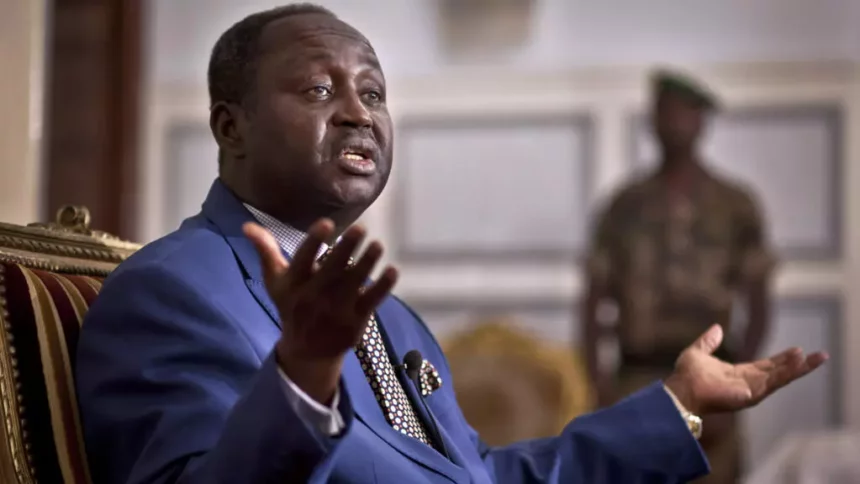
African Union have been meeting for the first time since the death of its former leader and financial backer in chief, Colonel Muammar Gaddafi last October. The issue of future funding for the organisation may yet be on the agenda even though the proceedings have been dominated by leadership elections.

Emblem of the African Union

Image via Wikipedia

Whatever is on the agenda, it is unlikely many Africans, let alone the international community really expect much from an organisation that has always shown its weakness at crucial moments, the Libyan case being the most recent example.

Yet 2012 could prove to be one of the most crucial and challenging year for the continental body. 25 of the continent’s 54 (UN figure) nations will be holding elections of some sort, from presidential, parliamentary to local and provincial. 5 of these elections will be crucial presidential contests in Angola, Kenya, Madagascar, Senegal and Zimbabwe.

Trouble has been reported in Senegal ahead of February’s presidential elections. People are opposing the decision by the country’s courts to allow the 85 years old incumbent President, Abdoulaye Wade to stand for a third term, which is against the constitution that Wade himself apparently amended in the early 2000s to restrict presidents to only two terms in office. Things could get worse before the elections, and AU may have to intervene at some point.

Madagascar is already a troubled spot; José Eduardo dos Santos in Angola has been facing protests from the country’s youth frustrated by lack of opportunities and unfair distribution of oil wealth. Previous elections in Zimbabwe and Kenya that produced “no winners” and ended up “governments of national unity”, suggest fragile and nervy electoral period ahead.

“Governments of national unity” may have somewhat steadied Zimbabwe and Kenya but the truth remains that these governments are a fiasco. Why give up when you can negotiate for “government of national unity”? It is these governments that gave former Cote d’Ivoire’s President, Lauren Gbagbo an incentive to cling on to power after a lost election in November of 2010. After AU’s envoy and “government of national unity” broker in chief Thobo Mbeki failed to negotiate for one in Cote d’Ivoire, unrest broke and hundreds of innocent people lost their lives and property. Some are displaced, yet to return to their homes.

Of course AU has no mandate to decide winning candidates anywhere but these events suggests that the organisation need a strict code of ethics that will force presidents to respect their constitutions; no third terms where a constitution restricts a president to two terms; presidents must relinquish power once they have lost elections.

After Zimbabwe, Kenya and Cote d’Ivoire, why is there still no policy towards this goal? What would happen if Robert Mugabe loses election and refuse to go, again? Another “government of national unity”? Has the organisation learn any lessons? Or is it that our leaders are reluctant to bring strict rules in case they are trapped themselves? It is time AU turned its attention to something worthwhile and perhaps justifying its continued existence.

Enhanced by Zemanta

…and Glo launched

source Multitvworld.com

There was much anticipation among the Ghanaian youth on the 19th January 2012, especially after the Nigerian Telecom giant had postponed its launching in Ghana more than once. To the surprise of many, Globacom launched its voice network on the 19th just as they promised at the Glo CAF African footballer awards ceremony in Accra the month before. In the early hours of the launch date, interested subscribers were offered the opportunity to reserve their preferred numbers by texting their choice to 02330010100. It didn’t take long for this instruction to hit the social networks such as Facebook and twitter.

With Globacom on board, Ghana now has 6 cellular networks ie. Tigo, MTN, Vodafone, Expresso, Airtel and Glo. The mobile telephony industry is believed to become more competitive with this roll-out. Early last year, Glo launched its broadband wing offering Internet users another avenue to access Internet in their homes and businesses. Glo is yet to make a significant overtake in this area as Vodafone has a big market share. Glo would have to play harder in the voice and GSM arena should they want to overtake MTN as the leader cellular network in Ghana.

The networks have improved on their services to some extent and hav introduced many services which in the past were absent on their networks. Months after the introduction of Mobile Number Portability (MNP), Vodafone is reported to have overtaken Tigo in the 2nd position in terms of subscriber base in Ghana. Competition has led the players to reduce their call tarrifs by more than 50% (SMS tarrifs remain the same though, am yet to find out why!).Will Glo push this reduction craze further? Let’s wait and see.

Enhanced by Zemanta

Space has been conquered, what about child hunger?


A picture of a starving child being stalked by a vulture made headline news all over the world in the early 90s. I couldn’t have been old enough to know how to cross a busy street let alone solve simple maths problems like 5 minus 8, probably responding “it can’t,” along with a puzzled facial expression. The picture showed a starving Sudanese girl who had just collapsed on her way to a United Nations feeding station. she could hardly move or make a sound. She was that hungry. She had lost control of the use of her limbs and voice, her brain most likely shutting down and her spirit completely broken. She could have been just as old as I was then, and yet, she wasn’t grappling with simple childish things like math and street crossing problems. Rather, life and death at the hands of starvation.

Pulitzer prize winning photo by Kevin Carter showing a starving Sudanese child being stalked by a patient vulture.

I have only recently come across this picture through the Bang Bang club a partial dramatisation of this event and the life of the photographer Kevin carter who took the picture. What a sad sight. And yet despite almost 2 decades having gone by since the picture was taken, UNICEF reports that 17000 children die daily from hunger and related illnesses (1 child every 5 seconds!), this picture still holds meaning to this day.


While it is hard to look at the picture without trying to moralise, that debate has since run its course but the timeless message in the picture remains. To me the message is simply, something isn’t right. If we can allow little kids to starve to death or even go through life without enough to eat, something just isn’t right. In this age of amazing developments, where we have come from smoke signals to video chatting, hunting and gathering to genetically modified food, how can we still be unable to feed everyone on the planet? Let alone helpless children. ” We” were able to put a man on the moon over 4 decades ago but to this day “we” cant put 3 meals a day in every child’s plate. That can’t be right.


http://www.youtube.com/watch?v=P6a09JvH4Vc

Is it not the role of every member of society and the whole world to ensure that children are protected and assisted to reach their greatest potential? Well, it should be. Clearly we are not doing what we should be. Could this be because we simply do not care? Have we gotten so carried away in our own luxuries to appreciate the suffering of other people? Yes, challenges exit in the world and particularly Africa which make efforts to feed all people very difficult. Amid all the wars, civil unrest, and political instabilities the starvation of children and young people is still inexcusable. We shouldn’t expect to overcome most social ills on this continent if the young members of our society are hungry. A hungry child cannot learn or do anything productive and is prone to violence. What more, their master becomes whoever offers them food. Imagine what other social ills can come from that.


By saying “feed the hungry”, the world does not ask for a man to be landed on another planet, far from it. Simply that the world cares enough to take the necessary steps to make food available to all people on earth especially the vulnerable and helpless children. It is not easy, thats a given. But genuine concerted efforts to that end are a good start.


If we think always with our minds and never with our hearts, we will lose our humanity.


I came across this anti-hunger campaigns which i think is quite catchy. The I billion hungry movement: I am MAD as hell! Sounds very convincing when you listen to Jeremy Irons say it on this video.

http://www.youtube.com/watch?v=0l57fmIup9Q


Enhanced by Zemanta

moWoza-Mobile running for migrants

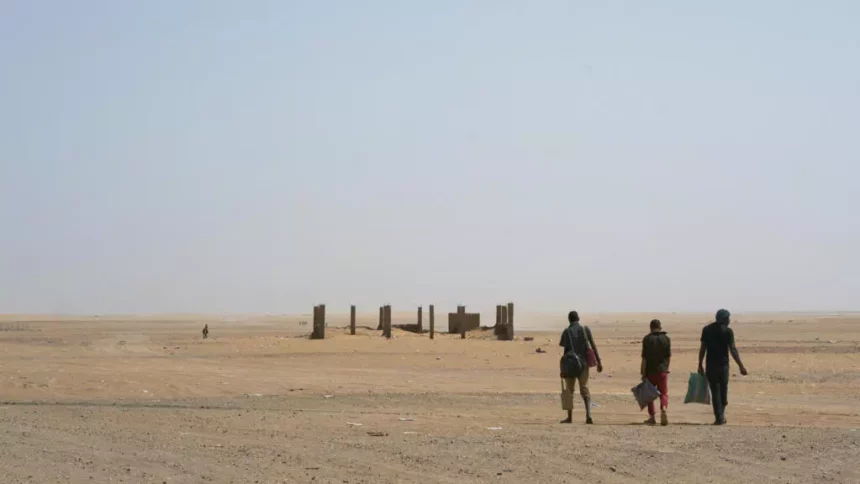
“moWoza”, a startup founded by South African Suzana Moreira, draws inspiration from Ceuta, North Africa, where one can witness the hardships of the ladies who carry goods from Ceuta to Morocco. They are referred to as the ‘Ceuta Mules’ because they carry up to 80kg of goods on their back. They can’t stand upright from the weight; some manage a few journeys but risk permanent damage to their frames.

While the problem of women hauling such large loads may be less common across other African regions, the issue of accessing products, especially staple food and hygienic products remains. Most commerce in Africa happens on the secondary market and customers are subject to many exploitative practices that now are present in the entire value chain.

Generally, transport providers’ primary customers are migrant workers who struggle to get goods to their families many countries away. However, the actual delivery of goods is not guaranteed because of the conditions of the roads, crime and corruption at border crossings. And sending Western Union or other remittance is of no use as these are expensive and lots of Africans in rural areas do not have the relevant documentation.

moWoza has recently asked for our support to have them selected to a program for entrepreneurs called the Unreasonable Institute Marketplace. The Institute requires people around the world to vote with their blogs and their wallets for the social startup they want funded. No matter how crazy this process is, you should check out moWoza if you are as interested in how technology can tackle development issues.

The company delivers goods with an end-to-end tracked service that alerts both sender and beneficiary of where the parcels are (via SMS alerts) and when they can be picked up from the closest designated location, usually a village shop. If the teams succeed in raising $10,000 in a week, they are called Unreasonable Fellows; and that might be well deserved. The Fellows will have access to leading business advice and further financing.

Related link: https://marketplace.unreasonableinstitute.org/project/mowoza/

Enhanced by Zemanta

A Look Back at Africa in 2011

Satellite image of Africa, showing the ecologi...

Image via Wikipedia

2011 was an eventful year for the continent of Africa, not least because of the wave of protest movements that was launched in Tunisia and then spread all over the world in various forms. Below is a roundup of some wonderful happenings on the African continent that you may have missed.


NORTHERN AFRICA
Algeria opened its first underground rail system in the capital, Algiers. The only other underground rail in Africa is in Cairo, Egypt. Tunisians peacefully deposed long-time president Ben-Ali and held elections to usher in their first democratic government. Well done, Tunisia! Uprisings in Egypt and Libya also led to a change in executive leadership in both countries, although in less peaceful ways than the Tunisian transition. Other North African governments, most notably Morocco, scrambled to give the people more of what they want, in order to avoid similar uprisings in their own countries.


SOUTHERN AFRICA
Miss Angola, Leila Lopes, was crowned Miss Universe in September; the Kingdom of Lesotho keeps taking giant steps towards gender equality and is ahead of some Western countries; and Zambia generated a lot of buzz all over the world due to the appointment of its first white Zambian as Vice President. In South Africa, paint factories run by our ancestors 100,000 years ago were unearthed. They demonstrate how forward thinking our people were.


EASTERN AFRICA
In Rwanda, Gregory Tayi has pioneered renewable energy by building small hydro-electric stations on some of the country’s rivers to provide electricity. Tanzania hosted its 4th annual Swahili Fashion Week to mark 50 years of independence and promote East African designers; a few southern African designers were also invited to participate. The Republic of South Sudan, Africa’s newest nation, was finally born after years of struggle. And if you haven’t heard, Ethiopia now has one of the fastest growing economies in the world.


WESTERN AFRICA
Angelique Kidjo, the amazing singer from Benin, continued to be an Ambassador for Africa as she entertained audiences around the world. Cape Verde graduated from the list of Least Developed Countries to become a middle-income country, and its President, Pedro de Verona Rodrigues Pires, was awarded the Mo Ibrahim award for African Governance. Cape Verde is a nation without corruption, and one of Africa’s success stories.
Mali celebrated African photographers at the Bamako Encounters in November. That same month the Paris Photo international fair was dedicated to Africa. Meanwhile, serial entrepreneur Magatte Wade, is redefining Senegal’s (and Africa’s) place in the world through manufacturing.


Villages in Action – an unusual conversation on development

Are you interested in the development of Africa? Do you ever wonder what the recipients of Development programmes think about development? Are you curious about what Africans are doing to develop the continent? Then sit back as we take on on a journey in Masindi NW Uganda

If you have come this far and want to learn more then head over to VILLAGES IN ACTION and better still if you can get to Masindi  Nw Uganda on 14 January 2012 for an unusual conversation on development

Enhanced by Zemanta

Ghana gets tougher on Climate Change

Ghana as a nation has taken various steps towards mitigating the effects of Climate Change. In the past couple of weeks, various activities and achievements have drawn the West African nation closer to the awareness of Climate Change. On the 17th and 18th of November this year, SpotOne Global Solutions Group in collaboration with various stakeholders organised a 2-day workshop in Accra to bring to light the effects of Climate Change and how technology can assist the citizenry in various ways.

The Apps4Africa event also introduced a competition to the developer community, offering it the chance to come up with innovations which can be leveraged by the nation it its quest to solving its Climate Change challenges. The winners of the competition were announced at a specially held function in Durban. Ghana’s farmerline placed 3rd behind Senegal and Nigeria. The Apps4Africa was attended by the Mayor of Accra, Alfred Vanderpuije who is reported to have promised an end to the perennial Accra floods tormenting the capital city middle income nation.

A few days ago, in Ghana, the Minister of Environment in Ghana disclosed the government’s intentions of being more strict on over-aged cars as a way of decreasing emissions in Ghana. This is a announcement by the Minister comes weeks after Executive Secretary of Energy Commission, on in June called for collaborative efforts by all stakeholders to enforce the ban on importation of used refrigeration equipment into Ghana. Due to the socio-economic standards of the people in Ghana, these bans will take sometime to take effect.

Fitting tribute to Wangari Maathai at COP17: Now to take her vision forward


Just had an inspiring day. The kind that makes you want to go out there and do something significant. Sign your name to a large portion of the earth, to remain there for eternity. I sat through a session that did just that for me today. The Forest Day 5 at COP17 in Durban South Africa gave a fitting send off and tribute to Wangari Maathai. A touching 8 minute video documented her vision and some of her achievements (based on the video below). Speaker after speaker showered unending praises for her visionary work. It got me thinking.

Wangari Maathai: greenbeltmovement.org


Just how much of a difference can a single person or a “not-so-empowered” group of people with an idea to serve make? In Wangari’s words, “Grass roots people can change the world.” That she did. A single and simple idea to plant a tree and get the rest of the world doing the same started movements on the continent and all over the world which have changed the lives of ordinary people, the way we see and appreciate the environment and demonstrated how much well organised pressure from ordinary people can force politicians into action. Whats more, all this she did from humble beginnings.


The Forest Day 5 sessions focused on REDD+ and how to operationalize it (among a few other related issues). Most ideas thrown around by delegates circled around community ownership of land, community-led reforestation projects, and incorporation of agriculture and gender issues. Interesting, especially considering that this is exactly what Wangari thought and set out to do when she started the Green Belt Movement(GBM) in Kenya in the year…wait for it…wait for it… 1977! Suprisingly, more than 3 decades later, the world’s leading thinkers, policy-makers and civic organisations are still debating such a “no-brainer.” The results of Wangari’s approach are self-evident in Kenya,and the mobiliation of global movements. Yet, progress on REDD+ is still very slow.


How did she do it? She was fearless, she got involved, rolled her sleeves and dug in (see video). Wangari challenged the powers that be and forced them to do that which needed to be done. She started small with what was around her and scaled up. Without taking anything away from current well-meaning efforts to get REDD+ working, it looks to me like there is lots to be learnt from Wangari Maathai and GBM. Sealing the REDD+ deal would be a fitting tribute to her. The question is, how? Are we willing to take the stand that she did and can we get the “powers that be” to do what obviously needs to be done, in the way it needs to be done?

At COP17 Forest Day 5 with M Dhlamini (CANGO-Swaziland) and E. Chivhenge (Gottingen University- Germany)


Enhanced by Zemanta

A plea this Christmas: Woman2Woman making a difference


It’s full steam ahead – developing relationships woman to woman, and not just a one-night stand: this is a lasting relationship.


It was a year or so ago when Susan Popoola challenged Patricia (TACT – The Akabusi Charitable Trust – Trustee with portfolio for Nigeria) and I to find her a widow that she could support with a gift aid of £100 to start up a business. It was to be an investment with no pay back (unlike our micro finance programs) that would help the lady to start a business that would alleviate poverty and initiate self-sufficiency.


Mrs Orji was the beneficiary who proved that with a little support, the seed funding affected not just her life but also the lives of her children who previously had been hawking artifacts for sale on the busy high roads into the capital city of Imo State which is called Owerri. There is a similar scene up and down the urban centers of Nigeria, the home of 160 million Africans and the most populous Black country in the world.


And so Woman2Woman was born. Since that first success story, the children are no longer hawking (gateway into drugs, gangs and for young women prostitution) but are back in school. Mrs Orji is now the proud owner of a fruit and veg stall with an official registration document from the State government. This means her future is bright; the children’s are secure, and the family is a good role model to other members of her rural community.


In Nigeria like many countries Christmas is seen as a time of family festivities , giving, sharing and celebrating the gift of life the Almighty gave as he provided His son as sacrifice for the sins of the world. This Christmas TACT are looking for 100 women (or people/organizations/establishments in the name of women) over the forthcoming year (2012) to give £100 to 100 women widowed in Nigeria, so they can start up their own businesses. We have found that this is the best way to help these women help themselves, their families and their community. On the ground, our delivery partners Forward Africa then run a capacity building and sustainability programme which ensures that as many as possible of the start up businesses succeed and do not fail.


Will there be failures? You bet. Our experience in the micro finance world has shown that these vulnerable groups – just as in the western world – have people whose ambition is greater than their abilities and despite the training support and guidance they are unable to maintain the disciplines or sustain the knack of making a business work. However these are few, and are far outweighed by the many who go on to make a thriving contribution to the local economy. This includes – by extension – sending to school and educating many other local children, and developing a sense of self worth and appreciation for being part of the solution and not the problem in Nigeria.


At TACT we are aware that we can not solve all of the challenges that the developing world of Nigeria holds, but we are also aware that we can do our little bit as in the words of the 18th century Whig Edmund Burke “for evil to prevail good men do nothing.”


And finally I go to a parable that has stuck in my mind as we at TACT work with like-minded people to make a difference in the county of my origin, one person (and in this case woman) at a time…


A little boy was apprehended as he was picking up starfish on an oil-infested beach and putting them in to a pail of seawater. He then walked a couple of miles to the other side of the peninsula to release the starfish into an unpolluted environment. A casual observer was so intrigued that on apprehension of the youngster he asked, “what on earth are you doing”?


“I’m saving these starfish” came the reply.


“But there is no way you can save all these starfish. There are literally thousands”, said the interloper with a rye smile.


”Aye” said the youngster, fresh of face, “I can’t save all of them but I can make a difference to this one and this one and this one”.


Thank you in advance for being prepared to join us in making a difference to the few people we meet, for being prepared to give, share and celebrate over this Christmas period and beyond the precious gift of life and the abundance that your world has provided to you. Clearly we will not be able to cater for all the widows of the world but as in the parable, you will be able to make a difference to this one and this one and this one xx


Warmest wishes


Kriss

Enhanced by Zemanta

Africa Investigates- A New TV Series Exposing Corruption

I heard about Africa Investigatesa few weeks ago and I really needed to share. It’s a new TV series (broadcasted on the Al Jazeera channel), in which journalists risk their lives to expose corruption taking place in their countries. Their goal is to have everyone become accountable for their actions. No matter who the person targeted is: police, minister, scammers…they are reported. These journalists are allowing civil society to find out the truth, giving them proof of what is going on in their societies.

photo from- talkmedianigeria.com

Oftentimes, these journalists venture into forbidden places, experience threats, are arrested, tortured and still strive to bring the truth to light. Their lives are always in danger. Some keep a personal diary of who they suspect is after their life so that if anything should happen to them, people might be able to trace down the culprit.  Others have their friends take turns to check up on them and ensure that they are still alive. One journalist said he had a panic button to press when he feels he is under siege. “Most importantly, I never walk alone”.  Still, many others don’t have this safety net available to them and are constantly living in fear. Journalists’ families become targets for those who feel they are being attacked or exposed. Some of these journalists can’t spend much time with their own families or even in the same location for more than a few days.

These African journalists are doing such brave work and for most, it is worth the risk. They have been through horrific experiences, some difficult to recount. One journalist who was tortured for years states: “When they torture you, your spirit is being broken down.”  But this does not seem to stop them because they have a common purpose: “Acting on behalf of the helpless and getting their stories heard”. “Even if one life is impacted, I am satisfied”, says one journalist. Every day they work hard to change inhabitants’ circumstances for the better and for this they deserve all of our respect.

A few of these episodes are on Youtube. The first one I watched: What Price The Story is an account of what drives people to become investigative journalists.  In another episode, Fool’s Gold, a journalist named Anas goes undercover to expose a multi-million dollar scam in Ghana over fake gold. One interesting point that the journalist makes is that such scams in turn damage real investment opportunities and prospects for the country. In this story, there is a wide network of people involved: police, customs officers…some engaged in fraudulent behavior, others on the good guy’s side. The story eventually serves as a warning to all investors.

In another episode, Zimbabwe’s Child Exodus, a journalist examines what motivates children to leave their native Zimbabwe and attempt to cross the dangerous border into South Africa. In one instance an 11 year old boy works for 8 months to be able to save $50 to pay human smugglers (Magumagumas as they call them)  to help him cross over to the neighboring country. It’s really sad the risks theses children take for a chance at a better life. But they are not the only ones taking big risks. The journalists also risk their lives each day to tell a story that warns people or sheds light on injustice.

It would be interesting to look into what motivates “the bad guys” to act the way they do: high unemployment rates? Poverty?  Also, finding a way to gain more international support for these journalists should be a priority because without international community support, their jobs become all the more difficult and dangerous. Most of these journalists operate alone and that is frightening because if they were to get arrested, held captive or tortured, there is no telling if they’d make it out alive without the international media to help bring to light these injustices. Hopefully this TV series will help start a very crucial dialogue not only about the issues being addressed in the documentaries but also the need for international support.

Enhanced by Zemanta