February 5, 2012

Ethnic Identity Today: Is It Relevant?.

Some weeks ago, I was exposed to a certain cultural practice of my ethnic community that was so fascinating that I thought I would share it here. Did you know that amongst the Gikuyu, when you are invited to a goat eating session and you eat the shoulder blade, you must cut a hole in the bone before discarding it? Failure to do so makes you liable to a fine of a whole ‘nother goat. You cannot delegate this duty to anybody else and cutting a hole in a different kind of bone does not count.

Why is cutting a hole in the shoulder blade so important you ask? Well, it works like this. Back in the days, when left over bones and offal from barbeques were merely discarded in the open to decompose naturally, wherever the bones landed grass did not grow, what with the bones blocking sunshine reaching the ground. Unlike other discarded bones, the shoulder blades can block sunlight from reaching a considerably larger patch of ground. Hence when this patch of ground does not have grass on it, the person responsible for that bone has indirectly denied a living sheep, or goat grass to eat. Therefore to prevent such an unfortunate occurrence from happening, the habit of drilling a whole the shoulder blade developed. The hole, off course, would allow sunshine through and allow grass to grow when the bone was discarded.

Nice story huh. Anyway this little anecdote got me wondering, just what relevance, if any ethnic identity has in modernity, even in the life of a person of my generation. For starters, the rite I just described in paragraph above is in itself no longer relevant as to the best of my knowledge the bone in question at the time was either composted or given to a dog somewhere. There are many old practices similar to the example I have given, with polygamy and Female Genital Cutting the most publicised. Neither seem particularly necessary in today’s world whilst FGM has been proven beyond reasonable doubt to be nothing but a threat to the health of the girl child. Yet practices such as these seem to linger. Supported, if not practiced, even by younger generation Africans. Most young Africans are so westernised these days that we can hardly even speak our respective mother tongues with at all, never mind with any great deal of fluency. On the other hand some of us, myself included, have older relatives (probably a grandmother, grandfather even a great grand father somewhere) who speak nothing but the tribal mother tongue. On that basis, alone we find ourselves cut off from our older generations.

Then there is the small matter of voting during elections. In 14 days time I might be exercising that right for the first time. In this referendum, should I vote on how I understand this draft constitution, or what the big men in the local M.P’s political party? Fortunately, for me in particular these two things dovetail nicely so it is not really a big deal. However, what happens when I see things differently from the official ‘tribal line.’
We Africans have already seen how high the price can be for entire communities caught up in the wrong ‘tribal block’ in the wrong place at the wrong time, Kenya in early 2008 and Rwanda in 1994 being the most graphic cases. Should the fact that you happen to be born to family with ambiguously relations to some fat old man in a suit, a house on a hill be the defining factor on how you vote. It might be an advantage because you no longer have to agonise over, how clever or stupid the person carrying the flag at council level is. It might give a little bit of identity because you get to participate in a collective act of identification but at what cost. You mostly end up with a government full of mediocre individuals mostly either lining their pockets with tax money or simply failing to stand up for you when you actually need his assistance. Certainly, ethnicity should not be allowed to dictate some things yet the reality is it often does. Even when that representative of the community benefit’s the tribe as a whole what happens to those communities whose ‘representatives’ miss out?

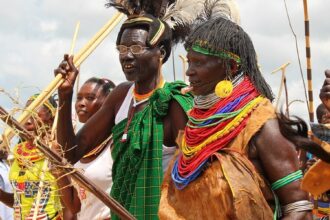
All in all many young people in Africa today certainly still know that we have Igbo, Somali, Maasai, Xhosa, Fulani, Shona, Hutu, etc (the list is endless) blood flowing in their veins. Thusly this has certain effects on our identity and relations (some I have mentioned here some I haven’t) on how we relate to one another and our environments. Mostly the effects are negative, retrogressive, and or unappealing. Can things be different especially now, as I believe many African countries are set to witness a generational shift in leadership to a crop of leaders with no memory of colonialism? Perhaps yes, perhaps not.

Comments

  1. Grace says:

    Thought provoking! Thank you for this article. I am probably off base with my take and perspective on ethinicity and how I relate. Personally I don't think lack of colonial memory alone determines one's hunger to find identity or relate. I think it is the lack of inclusion and social intergration that drives one to check and seek identity. For me this came on early I believe because of the personality I am whereas for a cousin I later came to share my childhood with here in the UK, the identity search or crisis didn't set in until his late teens. He'd grown up surrounded by predominantly white persons and looked down on everything African – maybe because all he saw or was taught/shown about Africa and Africans was negative. Then when he got to his teens and spent a spell in Africa, he moved amongst a class of fellow Africans who believed themselves to be above all others around them because of the tribal orgins. To me it appears one exchanges different challenges in ethinicity at given stages of life and society.

  2. andruid says:

    that's true. I lived my entire childhood in Kenya before spending some time studying in the UK. I certainly agree with your point that living in independent Africa gives one a stronger sense of pride in one's own identity as an African. Yet beyond that there are not very many positive or productive (in my view) of that confidence in either African Ethnic, or national identities. Those that I do see are primarily created by people who are too young to have a personal experience with colonialism. Hence my hope that a new generation of leaders of that kind ion Africa can capture that energy for a greater good, rather than self preservation

  3. idahorner says:

    Interesting and thought provoking Andrew. There are cultural norms such as the FGM etc that do not serve us at all. I watched in horror the other other night as a so called Nigerian Pastor abused children having branded them as witches and been paid handsomely but their parents. This was here in the UK! Why do we hang onto cultural practices that do not have a place in modern day society is honestly beyond me!

    The partitioning of Africa by the Europeans into countries with folk that do not speak the same language no share the same cultural backgrounds was the start of some of the troubles that we have today. We however cannot live in the past and have to work out a way to get on! And this is possible.

  4. Cb4tsk says:

    Ida – I'd agree with your statement on knock-on effects of partitioning Africa playing a role in the current state of problems by us all Africans – both inside and in the diaspora. Some of these cultures embodied a way of life be it in faith as well as existence. Most of this was wiped clean in order for us all to embrace the teachings and practices we try to immitate from Europeans. I blogged a bit on this on my dreamaspirations web site following some interesting observations that led me to compare Seers/fortune tellers with forms of juju or witchcraft so will not reiterate what transpired…

    I think we need to know how to get on by first of all respecting and understanding each other's belief in a manner that allows for openess and tolerance as opposed to preaching. Sometimes, I find this lacking even amongst our own fellow persons.

  5. idahorner says:

    I agree entirely, living in teh past will not get us anywhere quickly!

Trackbacks

  1. [...] Maina reflects on the impact of ethnic identity, especially in the context of elections and the potential generational shift in the relevance of such concept: Just what relevance, if any ethnic identity has in modernity, even in the life of a person of my [...]

  2. [...] Maina reflects on the impact of ethnic identity, especially in the context of elections and the potential generational shift in the relevance of such concept: Just what relevance, if any ethnic identity has in modernity, even in the life of a person of my [...]

  3. [...] идентитет, посебно во контекст на изборите и можната генерациска смена во релевантноста на таквиот…: Каква релевантност има етничкиот идентитет, ако [...]

  4. [...] Maina reflete sobre o impacto da identidade étnica, especialmente no contexto das eleições e das potenciais alterações generacionais na relevância de tal conceito: Just what relevance, if any ethnic [...]