May 18, 2012

Events in South Sudan and Cote d’Ivoire will not Define African Democracy

In the last month or so, my beloved continent, Africa, a place many archeologists and historians believe is the cradle of humankind has been engulfed in political mêlée: from the election impasse in Cote d’Ivioire, the South Sudan referendum, the protests in Tunisia and Algeria to opposition demonstrations in Tanzania.

Like Mozambique in the later part of 2010 where people successfully protested against rising food, electricity and water costs, the protests in Tunisia, Algeria and Tanzania have largely been labelled as riots. These protesters are NOT

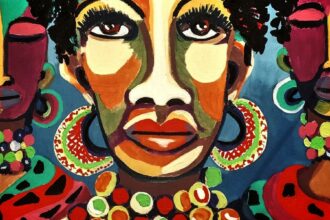
Portrait source: Google images

rioters; they are well intentioned people standing up against leaders and governments that do not have regard for people’s democratic rights and do not care about people’s welfare. Most leaders in Africa only worry about winning the next election. Thanks to the perfection of means by ruling parties on the continent; incumbents hardly lose election in Africa. We have seen elections in Zimbabwe and Kenya that have have produced no winner or loser, giving these two terms their literal meaning. Laurent Gbagbo is currently trying his luck in Cote d’Ivoire, and why not? Throughout the short history of modern democracy in Africa, only Ghana, regarded as the best democracy on the continent, has managed to change governments through the ballot. Is this a coincidence?

Now it would appear Africans, especially those in the aforementioned countries are fed-up with electoral democracy in Africa where people’s role is only to put leaders into power then the electorate must leave at the mercy of governments’ decisions and policies that hardly take people needs into account. People are quickly realising that they are not only there to vote leaders into power; the people are also there to ensure that elected officials do not abuse their position but act according to stipulations of their office and heed to the wishes of the electorate. Unleashing trigger-happy police on innocent protesters in order to call them rioters can not mask the undemocratic nature of the majority of the African leaders.

The protesters are doing exactly what democracy is all about: government of the people, for the people and by the people. That is how democracy must be measured if there was ever a yardstick. The Sudanese referendum and the Cote d’Ivoire’s electoral stalemate have grabbed most of the spotlight; Africa and the rest of the world will undoubtedly learn a thing or two about African democracy, its future and the capabilities of African Union in resolving tricky issues. But the events in Sudan and Cote d’Ivoire will not define African democracy. The people will. It is time to pay attention to the growing wave of protests on the continent.

Comments

  1. Saran116 says:

    “But the events in Sudan and Cote d’Ivoire will not define African democracy. The people will. ” I love that. What is happening in the Ivory Coast is quite unfortunate and I think that at this point, the only way the country has a chance at peace is if Gbagbo himself decides to step down and calls for no retaliation from his supporters. This, I do not foresee happening and it’s a shame. I just hope that all gets sorted out fast because despite what we’d like to believe, it seems that democracy is being measured less and less by the will of the people but rather that of gvts. Can we all say “illegal democracies”? :(

    • Jimmy Kainja says:

      Saran116,
      The meaning of democracy and/or democratic process is pointless, insofar as my point is concerned. The point I am making here is that whatever happens in Sudan or Ivory Coast will not change the way African democracy functions, as most ‘experts’ wants us to believe – people will. What has happened in Tunisia is exactly what my point – would I be right to say that I predicted the Tunisia’s outcome? You decide.

      You see, our elected leaders (African) have proved worthless and too greedy to develop the continent and uplift the people’s living standards. Nearly two decades since majority of African countries did away with dictators, the despots are coming back, this time via the ballot. People are getting tired of this and they will eventually get rid of the system. Any political regime rely on people’s obedience, be it through coercion and/or hegemony. Colonel Gadaffi has denounced what’s happened in Tunisia – people power. He’s right, he knows he could be the next one to go!

  2. Mwakarama says:

    Annonymous Comment:
    Mr. Jimmy Kainja – You write very formally. It is only that your subject is very hot current affairs in Africa, that I comment at all…
    First of all defination of Democracy (the word) does not exist. Leadership “by the people and for the people or Multi-party democracy” does not amount to defination of anything. The problem of Africa begins at the University… where African academics mould the leaders. They know that they are not driving any senses into the head of the African students: this factor is seen clearly when you attempt to review parliamentarian’s in-precinct conducts. No President in Africa leads without the parliament – they are the people’s representatives – but they are quiet… till the people flock into the streets demonstrating against the President.
    There is no African country that has an act of parliament specifically spelling-out details of the process of ‘change of power’ – African University acdemics don’t teach that – so what procedures was President Lurent Gbagbo to follow in handing over power…? Was he supposed to follow whatever any tom dick and harry said?… and just walk-out. When that process was never part of his national law? Where was it ratified, and by which President – in a parliamentary bill tabled by which representative?
    What about Tunisia? Where were the elites, when food scarcity crept-in? Couldn’t they see that there was no job-creation – which was a bad signal really very long time ago – really couldn’t teh elite see that?

    • Emang says:

      These are some very valid points. Perhaps there is a lack of freedom of speech due to fear of whatever it is that leadership does to anyone who questions their authority. But the lack of transitional plan or process, is that really the current status of change of power, that there is no process after all these years?

    • Emang says:

      These are some very valid points. Perhaps there is a lack of freedom of speech due to fear of whatever it is that leadership does to anyone who questions their authority. But the lack of transitional plan or process, is that really the current status of change of power, that there is no process after all these years?

    • Jimmy Kainja says:

      Saran116,
      The meaning of democracy and/or democratic process is pointless, insofar as my point is concerned. The point I am making here is that whatever happens in Sudan or Ivory Coast will not change the way African democracy functions, as most ‘experts’ wants us to believe – people will. What has happened in Tunisia is exactly what my point – would I be right to say that I predicted the Tunisia’s outcome? You decide.

      You see, our elected leaders (African) have proved worthless and too greedy to develop the continent and uplift the people’s living standards. Nearly two decades since majority of African countries did away with dictators, the despots are coming back, this time via the ballot. People are getting tired of this and they will eventually get rid of the system. Any political regime rely on people’s obedience, be it through coercion and/or hegemony. Colonel Gadaffi has denounced what’s happened in Tunisia – people power. He’s right, he knows he could be the next one to go!

Trackbacks

  1. [...] Read the full article here Tags: COTE D'IVOIRE, DEMONSTRATION IN TANZANIA, IVORY COST, MOZAMBIQUE RIOTS, RIOTS IN TUNISIA AND ALGERIA, SUDAN REFERENDUM [...]

  2. [...] This post was mentioned on Twitter by Ida Horner. Ida Horner said: reading Events in South Sudan and Cote d'Ivoire will not Define African Democracy http://ow.ly/1aONz0 [...]

  3. [...] For those that may not know what is going on over in Ivory Coast there was an election in November and the incumbent president lost but refused to go. In a nutshell there is an impasse [...]