May 18, 2012

Technology: Exactly what is it?

Kenya and Africa as a whole has in the past decade been the subject of the media and recieved alot of attention what with creating a vibe that is tech fueled, ignore the fact that for now most of this technology or the tools used to build it are foreign.

Wikipedia describes technology as the making, usage, and knowledge of toolsmachines, techniques, craftssystems or methods of organization in order to solve a problem or perform a specific function. It can also refer to the collection of such tools, machinery, and procedures.

By this definition Technology is a very broad spectrum that encompasses all disciplines. Reading the local dailies or local blogs in Africa yields a different picture. Technology here refers to computers, phones and related fancy wizardry in the name of software solutions by the plethora of foreign/local IT firms. The efforts of a guy trying to build a helicopter from scraps that he picks around will likely not get even a passing mention.

This lopsided view is going to be detrimental to our country’s well being in the long run. This is because focus and effort will not be directed towards ‘jua kali’ technology developed by the youth in village workshops but to the mac-book totting urbanite counterparts spending daddy’s money at the many hackathons and competitions. This in my opinion is not Africas’s future. It’s a haze created by the comparable effect that silicon valley has had on the American economy. Its a different ball game over here.

Enhanced by Zemanta

Apply for a MEST scholarship today

The Meltwater Entrepreneurial School of Technology, funded by Norwegian Software-as-a-Service (SaaS) company Meltwater Group headquartered in San Francisco, is offering Ghanaian graduates interested in IT and entrepreneurship a unique scholarship opportunity to get trained and get funded to start IT based companies focused on global markets.

ABOUT MEST:
The Meltwater Entrepreneurial School of Technology (MEST) is a not-for-profit training organization fully funded by the Meltwater Group and currently training and developing the next generation of global software entrepreneurs from Ghana, West Africa. Graduates from the program with viable software based business ideas get seed funding, office space, infrastructure and mentors in our business incubator where they get to develop their ideas further and with support to help take their ideas off the ground. Our goal is to create wealth and jobs locally in Africa by training and mentoring young Africans to start their own software companies that can compete successfully in the global marketplace. It is our hope that these software entrepreneurs will inspire generations to follow in their footsteps. www.meltwater.org.
WHAT MEST OFFERS
• A two year FULL SCHOLARSHIP program focused on market-oriented software development and practical entrepreneurship training. Our goal is to provide you with the practical skills and resources you need to start a company that can compete in the global market space.

• A full time in-house training in commercial software development and entrepreneurship within an international environment, an international faculty with over 20 years experience in software development and international business. Details on the training content is available at: http://www.meltwater.org/program/training/

• Housing, tuition fees, meals and study materials provided to selected applicants

• A business incubator that offers seed funding and infrastructure open for qualified graduates of MEST

WHO CAN APPLY?
Applicants should be university graduates, final year students completing school by June 2012. Prior knowledge in computer science or programming is not a requirement. Requirements include a degree from the following Backgrounds:

- Social Science, Business, General Science, Computer Science, Engineering, Arts and other backgrounds qualify to apply to the MEST Program.

SELECTION CRITERIA:
Applicants should have the passion to start their own software company, an interest in technology / computers, confidence to take risks, drive / stamina, team player skills, good communication skills, personality & humour, entrepreneurial spirit.

HOW TO APPLY:
To apply to the MEST program, please follow this link:
http://www.meltwater.org/admissions/
Deadline for application: 15th April 2012

Enhanced by Zemanta

International Women’s Day and the courage to be

Success begins with the first step…often into the unknown…with no other evidence than gut instinct…and the courage to be.

The Akabusi Charitable Trust (TACT) is an organization dedicated to the rural communities of Nigeria. It came out of my yearning to get in touch with the country of my origin, a faint memory since being abandoned in the UK by my parents and in particular my mother.

To be fair to both Mum and Dad it was an act of love, to give me a better highly prized British education. However with an inadequate understanding of time and distance and the limited ability we have to control macro politics or social dynamics, their dream was to become their worst nightmare. Three thousand miles of Atlantic sea, a three-year civil war, and a Greco Roman education rendered nature a distant relative to nurture and never the twain did meet.

I’ve spent fifty years trying to connect the dots – to make sense of my past and embrace my present in order to create my future. Experiences in children’s homes, military establishments, international sports teams, national media studios, corporate suites and of course a twenty-year marriage (now divorced) have helped me work things out, but I’m still discovering myself.

J. R. R. Tolkien is quoted as saying, “all who wander are not lost.” With no clear goal save to engage with Nigeria, I began charitable work in that country. That was just over ten years ago, in 2001. This past month – a decade on from my first experiences of digging bore holes “water and sanitation” setting up business (micro finance) – I was able to review the wonderful fruit TACT is bearing. I was proud to shake the hands of the latest cohort of women to graduate from the TACT Women2women program; women who now successfully demonstrate that they have the desire to better themselves, be part of the economic development of their local community, and leave a legacy.

It made sense of the hard work of so many people who have banded around my dream, and given blood, sweat, and tears to make it happen. TACT aims to help build Nigeria one person at a time, by developing programs to support people in Imo state. One of our key target groups is women, and widows in particular. TACT has therefore set up a project called Woman2Woman with the aim of encouraging women in the developed world to help those less fortunate than themselves in Nigeria, A small grant of £100, paid in two installments, can make a huge difference to the life of a widow in Nigeria and her family by enabling her to start a small business and become economically self-sufficient.

Unlike other micro finance schemes, Woman2Woman does not demand repayment of a loan but is a grant to promote the best possible chance of success.

International Women’s Day has been celebrated since the early 1900’s in the developed world and is an official holiday in many countries across the globe. Every year humanity celebrates with a multitude of events held in honor and support of women and their contribution to mankind.

I personally want to take this opportunity on behalf of everyone at TACT to thank the many women in the west and their forward-thinking male counterparts who have continued to support the growth and development of woman in Africa as we forge ahead and help “build Nigeria, one woman at a time.”

Enhanced by Zemanta

Mabula Private Game Reserve – Relaxing Retreat

With 2012 well on its way, you may be contemplating holiday plans. If so, we can seriously suggest that you consider an African getaway.

As long-time wildlife photographers, my husband and I have had the great pleasure of visiting a number of game reserves around Southern Africa, with accomodation ranging from five star luxury to the most rustic (i.e. zero facilities; bring everything yourself, including water) – an adventure of its own.

The wonderful thing is that there are plenty of options, so when our Swiss cousins were planning a recent trip to South Africa with their three young children, it was easy to identify a suitable destination; in this case the malaria-free Mabula Private Game Reserve.

Two hours drive from Johannesburg, this gorgeous game reserve boasts the Big Five along with fabulous accomodation, in the form of a stunning lodge and satellite camps of lovely, self-catering timeshare chalets. We opted for these, being a group of 12 people, and spent a glorious week in the bush.

In between early morning and late afternoon game drives, we soaked away the heat in the swimming pools, while evenings revolved around the braai in the boma, spiced up with South African wine. Some of our party enjoyed a horse-back safari, others played table tennis, the little ones took part in cookie decorating fun and we all learnt about reptiles at a lodge presentation.

There was so much to fill our days, including kicking back Africa-style, that we didn’t get around to everything on offer, such as quad bike riding. Instead, we focussed on our favourite – game viewing. You may enjoy a peek at this as much as we did:

Safari vehicle with photographers at sunrise

Warming up the cameras after a beautiful sunrise - Mabula Private Game Reserve, South Africa

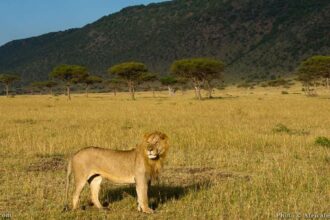
Male lion at a waterhole

Male lion after his morning drink

close up of two giraffe

Giraffe pair peering through treetops

Baby zebra crossing a dirt road

Zebra foal crossing a dirt road

buffalo pair eating grass at Mabula Private Game Reserve

Buffalo grazing in grass

Female Kudu in bushes at Mabula Private Game Reserve

Female Kudu peeping from bushes

Rhinoceros eating grass

Rhino grazing at golden hour

For a whole lot more photographs, feel free to take a look at my Facebook album: Mabula – Dec 2011

Here’s wishing you all a fantastic rest of the year, including everything that you wish for yourselves, including happy holidays as and when you have them.

Africa is not a brand! Or is it?

My very first post on Africa on the blog was entitled Africa is not a brand. In that post I challenged stereotypes and fantasies about what Africa was about and who should be taking centre stage in moving Africa forward. There is only one answer, Africans should take centre stage, and if friends of Africa want to lend a hand, then why not?


English: Samata Angel pictured with Janice Dic...

Image via Wikipedia

I challenged the fact that what most Africans value and pursue with their hard earned dosh are Western brands that cost no less than a car. The amount of women I see on the train, in facebook wedding photos and on the streets sporting a Louis Vuitton handbag is more than surprising. What is worse is that they are willing to carry the knock offs around with them with just as much pride. Can somebody please see the light? Please? I just don’t think it is classy, sorry Louie (sheepish smile).


So I went on to try and get us to focus on what could be special about Africa. Rather than just give out one non descriptive blurb, let us actually tap into the real beauty and diversity that the continent brings. I now believe, beyond the shadow of a doubt, that Africa is the melting pot of creativity. Music, art, drama, fashion, poetry, story telling and the list goes on. We need to tap into this, glorify it, give it the respect it deserves and hold it up with pride like lions…. And lionesses.


So, what am I talking about?


Well, Africa is the cornerstone of a new generation of high fashion and my dear friends; fashion takes you into the very presence of the who’s who of society. If you have got what is best, they are going to want it. Come on, the high flying bankers, hotel and business owners, the ones who believe they are the top of the totem pole, celebrities and presidents’ wives and children. They want the best. Don’t play around with your precious creations. Don’t down play them; you have eaten enough humble pie. It is time for you to rise to the occasion of extravagance. And if you do not believe where fashion takes you, just ask Samata Angel whose work and passion for fashion landed her on the red carpet in LA a couple of weeks ago. Yes, I am talking about the Oscars!


And so, I dared to challenge in my post 18 months ago that we should be competing with the likes of Louis Vuitton, Gucci, Prada and so on. And we should be making these brands for you and for me, not a handful of celebrities, they are not as powerful as the collective that you and I make up. Less than a year later, I attended events such as London’s Africa Fashion Week featuring designers such as Kiki Clothing and the extravagant Kiki Kamanu. The Africa Fashion Guide also launched and CNN has featured African fashion retailers such as My Asho and fashion billionairess Folorunso Alakija. What is next?


A whole lot more. Join me in my next post where I will talk about “that shop with the great leather bags” where you will be pleasantly surprised. Definitely watch this space because this new luxury brand speaks for itself and is already challenging brands such as Chloe and Mulberry, and dare I say it, my good old Louie!

Enhanced by Zemanta

African with Post Natal Depression

As my son approaches his fifth birthday I can’t help but wonder if I am or if I ever will  be ready to bring another child into this world. I would love too but a few factors hold me back. One of those is the possibility of suffering from post natal depression again. My doctors told me that I have a 75% chance of having it  if I am to have another child.

What is post natal depression and who does it affect?

Post natal depression is a mental health illness that is very common. It is thought to affect one in six women after giving birth to their babies. Some call it the “baby blues” but in fact they are not one of the same.  Post natal or postpartum depression (PPD)  is a far more serious condition which occurs two weeks to several months after delivery.  Post natal depression mostly affects new mothers but can happen to not  first-time mothers too. The condition causes mothers to feel exhausted  and emotionally empty and can potentially destroy the bonding  between a mother and her newborn baby.

Thousands of new mothers worldwide suffer from it in silence and are left alone to cope with it because it is not recognised or diagnosed.  Resources in many countries do not allow for the provision of appropriate care for PPD sufferers. PPD sometimes goes beyond the so called “normal” phase and it turns into an even more serious psychiatric illness known as  Puerperal Psychosis.

The causes of PPD are complex and variable. A lot of factors could trigger this illness and not known with certainty. It is thought that biological, psychological and social factors are all to blame. These include things such as history of depression, drop in certain hormones post delivery, and sleep deprivation.

I don’t know how near I was to be diagnosed with Puerperal Psychosis, but it felt like a close call. I thank my God every day for I believe I was in the right place at the right time when I had my baby.  I got all the medical help that I needed to get me better. I always wonder what could have been of me if I had been back home in Rwanda when I had the illness.

Living in the West, you hear about this illness being mentioned often but I had never seen or known anyone who suffered from it before I did. Women in Rwanda and the rest of Africa also suffer from post natal depression but when this happens, it becomes a very well kept secret! Hence why I had never heard of it!  If we are all aware that this illness can affect any woman anywhere in the world, why aren’t we talking about it? Is africa in denial? Being silent on the matter of PPD cannot make it disappear! Or is it because no one wants or wishes for their wife or daughter to labelled “crazy”. A generalised name that society gives to all with any form of mental health problem. “Gusara” is the word loosely translated in my mother tongue. Some communities go as far as blaming it on witch craft and black magic. What is worse is that in many parts of the sub-saharan continent, public health systems are ill-equipped to deal with postpartum depression, which means there is an absence of psychiatrists or clinical psychologists trained to help women cope with the condition.

Since my illness, I have discovered that there is a thin line between sanity and insanity. Every now and again I would read  African articles/stories of desperate new mothers throwing their new born babies in the pit latrines and always wondered how this could happen. Why would you carry a foetus for forty weeks then end up killing it once it’s born? Where do the women who commit this crime end up? Suffering the women are hidden from public view until they get better. And how about those that don’t get better, what happens to them?

Even though I hid the condition from all of my family and friends (this was after my cry for help was met with a “snap out of it” tone) I don’t think I would have wanted to be kept away from people for the whole length of time it took me to feel like I could have my life back again.

Women in this situation need our help and support. I know they could be a nuisance ( I probably was) at times especially with the mood swings and all but it is not enough to justify not helping them. If they are “crazy”, so what? What are you doing about it? Would you rather keep pleasing society than your loved ones?

To the women going through this:

1.Don’t suffer in silence. Tell anyone who is willing to listen and please seek medical help. I might not have opened up to my family and friends but I sure talked to my health visitors and doctors. It helped a lot.

2.You might think it’s taking forever to get back to being your old self again but it’s not. Take things one day at a time.

The above two played a big role in me getting my health and sanity back. But most of all, it made it possible for me to be able to take care of my precious angel. Made me thankful.

Enhanced by Zemanta

International Women’s day: The condition of African women

This year marks 101 years of International women’s day but I wonder if things have changed for African women in real terms. There is no doubt that there have been huge changes for the better but how wide spread  these changes are is the subject of this post.

If we speak generally we can see that within the last 100 years Africa has had its first Woman President in Ellen Johnson Sirleaf something that some among had never dreamt possible .

Increased access to education for African women has meant that many African women have it into the boardrooms of multinational corporations, governments, political and education institutions and agencies as well as international institutions. This increase in access to education has also meant that African women have access to jobs/employment outside of the home than was previously the case and consequently african women now have financial independence and as a such a say as to how this is spent in the home.

African Women are also making huge strides in the areas of technology and indeed the head of policy at Google African is an African woman.

This is all great news indeed. But and there is always a big but, the disparity between the women I have described above and those at the bottom, mostly rural African women is huge. Progress for such women is hampered by several things,

  1. African culture and norms
  2. access to education
  3. inability to negotiate how family income is spent
  4. having no say as and and when they can have children or how many children for that matter (contraception comes to mind here)
  5. property rights
  6. world issues such as globalisation


It is not my intention to discuss each of these in detail here as we have discussed some of them of this platform several times. But I would like to turn to the issue of what has been termed as LAND GRAB  which was the topic of the BBC Africa debates last month. What struck me in that debate was that African women were being hit by both the effects of Globalisation and remnants of African culture that do not serve us. A woman on the programme said words to the effect- we do not have a say in how the land deals are negotiated because we are asked to leave the room when the negotiations start 

This is not the first time I had come across such a practise as late last year I had a conversation with women is Kisoro SW Uganda  and they too complained about not hang a say on issues pertaining to land and how it is used etc. My worry here is that African women have responsibilities to ensure that everyone is fed and in fact grow 50% of the continent’s food. What implications does this have for children in particular?

My question to you fellow Africans and friends of Africa is


What can we do to ensure that the world of the African woman who has no property rights, access to education, independent income etc, converges with the rest of the world?


Enhanced by Zemanta

No, Mr President, You Don’t Need 26 Years in Power to Become ‘an Expert in Governance’

After over two and half decades in power, President Yoweri Museveni of Uganda recently boasted of expertise in governance – brought by his 26 years of presidency. 26 years in power is a very long time, by any measure. There is a whole generation of Ugandans that have not known any other leader but Museveni.

Museveni was sworn in as president on 26 Janua...

President Museveni takes an oath (1986) Image via Wikipedia

Yet history recalls that President Museveni’s remarks contracts what he said when he initially came to power in 1986:

“The problem of Africa in general and Uganda in particular is not the people but leaders who want to overstay in power.”

And here is President Museveni 26 years later (2012):

“Some people think that being in the government for a long time is a bad thing. But the more you stay, the more you learn. I am now an expert in governance.”

That is the difference presidency make. Yet Museveni is not a lone in this, it is a continental problem. Malawi’s former president, Bakili Muluzi once believed that African presidents, Malawi in particular, should not be in power for more than a decade. This was in the aftermath of the fall of Hastings Kamuzu Banda’s 31 years of dictatorship.

After winning a re-election for a second and last term in office, Muluzi saw things differently. Now he need more than two terms in office “to finish his development projects.” Muluzi launched a ferocious campaign for a constitutional change to allow himself more time in power. Fortunately, parliamentarians vetoed the motion and democracy carried the day – credit to Muluzi for accepting the defeating though.

President Abdoulaye Wade of Senegal must have learned from Muluzi’s failed attempt. Wade came into power in 2000 for a 7-year term and got re-elected in 2007 under a new constitution, which reduced the term limits to five years. In 2008 the constitution was changed again to allow for two 7-year terms. This would be from 2012. It is important here to notice that these constitutional changes happened on Wade’s watch. Now Wade has refused to step down after two consecutive terms in office. He has argued that the constitutional changes allow him to run again. The Senegalese courts have backed him, and bar Wade’s most formidable opponent, musician Youssou N’Dour.

After fracas and political unrest that has followed these events, Nigerian former president, Olusegun Obasanjo tried in vain to talk Wade into stepping down. Ironically, Obasanjo himself tried in vain to extend his term limits in 2007.

Surely there is something about African presidential seat that only people like Museveni, Muluzi, Wade and Obasanjo can explain. However, it has nothing to do with experience or development, as Museveni and Muluzi, respectively, want the world to believe. It has everything to do with self-serving politics of the continent.

While in the West politicians are not corrupt-free, UK’s MPs expenses scandal is the best example. Yet if people in the West want to get filthy rich they get into banking, stock trading, hedge funds etc., in Africa you join politics. This is what incentivise African politicians, particularly presidents to cling on to power.

Yes, experience is desirable in many aspects of our lives and activities but not with governance. Unless if we decide to ignore traditional forms of democratic governance, and adopt chief executive style of leadership – with one man calling the shots. Presidents come to power without experience of that position anyway, unless it is a comeback, which is unlikely in places where term limits apply.

To have good governance and functioning governments you need a vibrant and independent civil service and civil society, independent police, in the service of the people not the state, separation of powers between the arms of government and respect for the rule of law. It’s presidents like Museveni who have convinced themselves of their expertise that compromise good governance because they do not listen to anyone and this underestimate the rule of law.

This article was first published on The Spirit of uMunthu

Enhanced by Zemanta

Child’s Play in Africa: The Missing Black Doll

Bébé en celluloïd

Black baby doll Image via Wikipedia

I remember receiving a request from someone in Malawi about year ago, and this list specified that they wanted a black baby doll for their daughter. I initially searched online, but after having little success online (particularly due to price and time limitations), I decided to drop by nearby stores one afternoon to pick up a doll. I ran around to three different shops in order to find a suitable doll that fulfilled this request in American suburbia and found this task to be daunting: a lot of the ‘black’ dolls were for older kids,  featuring black dolls in urban hip-hop clothes; some were too scary looking for a  little girl,  featuring mean looking eyes; other black baby dolls were overpriced; some were the type that would fall apart easily at the hands of a two-year old (those terrible twos); and lastly, others were just poorly constructed – looking like they had been thrown together at the factory as an after thought. I also found that  placement was poor – I had to look for them at the bottom of the shelf or sift through the  white dolls to find the same model in black (I didn’t see any other shades represented either – it seems human beings only come in two shades in the doll world). A few weeks later when I traveled to Malawi and South Africa, I noted the noticeable absence of multi-ethnic dolls, particularly, dolls that resembled dark-skinned or black African people. I observed that in most major stores in both countries,  dark skinned dolls were few, if  present at all. Where were all the Black dolls?

Antique doll.

White baby doll Image via Wikipedia

More recently, I came across a news article about a group of elderly Canadian women (mostly ‘white’) that were making dolls to send to Africa as part of their weekly charity work. My first reaction was that this was a noble gesture and productive way of spending one’s golden years. However, after close inspection of the photo that accompanied the article, I had to pause in my tracks. The majority of the dolls that were depicted in the photos, were dolls that did not look like the majority of little African girls or boys in terms of skin tone.  The article did note that they included ‘ethnically sensitive’ brown skinned dolls as well as multi-colored ones (including blue and green). I still wondered how many didn’t have the option and were forced to receive a doll  of a different ethnicity just so that they could have one. I also wondered how many would receive one of the unnaturally colored  blue, green, or rainbow ones that was technically looked like them but was the color of a Smurf, Martian or human – (with jaundice) which is equally problematic for an impressionable mind. Needless to say,  given these recent experiences, I came to the realization that children in those two countries  (and I am sure it’s the same for other African countries) do not get the opportunity to play with dolls (or action figures in the case of boys) that  resembled like them. Whilst black African parents should do their utmost to raise children that are not biased or prejudiced and let them play with dolls of different colors that represent the continent, I think that it is highly problematic when black parents are left with no alternative but to have their children play with dolls that don’t resemble them. I also think its problematic when in some cases, the only doll they will ever have doesn’t look like them.

The Cheetah Girls dolls

Multi ethnic Cheetah Girls dolls Image via Wikipedia

I recall a story about a white American father, Joey Mazzarino, a Sesame Street writer and puppeteer, whose daughter, an Ethiopian-American girl, had an attitude change towards her own hair, when she started playing with Barbie. Like most girls, she wanted to look like Barbie! He eventually produced a Sesame Street video ‘I Love My Hair’, that aimed at showing her someone that looks like her as a Sesame Street puppet. The psychological impacts linking a dolls color and attitudes towards color and self identity have been chronicled time and time again. Starting from the original Kenneth and Memie Clark studies in the  1950’s to current reproduced studies that have the same results. Therefore one cannot argue that children don’t know the difference between races at such a young age – they do. In the Clark experiments Bblack American (african-american) children wanted to identify with the doll that was considered good and attractive, so the doll that they consistently chose didn’t look like them. Over the years, subsequent studies show that black children and latino children in the U.S consistently chose white dolls over black ones. Many point directly at the black dolls when asked to point at the less attractive or ugly doll. This experiment highlighted racial dynamics in the U.S. and showed the totalizing standards of beauty  transmitted in American culture to children from a young age (See article/video about study). I have not heard about a similar experiment being  conducted in Africa across different African settings (rural, urban populations), but I would be curious to see such a study conducted in present day Africa on present day Africans.  However, it is plausible to deduct, given the history of domination on the continent, that the psychological affects of this should be damaging to a girls self esteem and African standards of beauty.

Logo for WikiProject African Diaspora at :en.

The African diaspora is vast, extending to the Americas, Europe, and increasingly, Asia. Image via Wikipedia

Various antique to modern Black dolls from the...

A collection of Black Dolls. Image via Wikipedia

I am certain from a business perspective, the importers of these products like large retailers (Game/PEP stores) in Africa, are banking on the purchase of these items by white Africans or white expatriates who they think have the money to purchase these dolls (although I  did take note that the Chinese owned businesses are also well stocked with white dolls as opposed to black ones). However, I would like  to know if they actually conducted any market research to see who is purchasing the dolls and what the preferences of customers are or if they were based on general assumptions. How would they then find out if perhaps, the customers are the black  affluent Africans that have no choice to buy their dolls from there bought these. Perhaps, they are losing sales from the countless number of people that have to come overseas to buy black dolls – it a continent with a population of 1 billion. I would be curious to see if Africans are unknowingly spending their hard earned cash in the market locations as well  in order to buy their kids ‘western’ fashioned toys that will negatively impact their kids in the long run. The new trend in business has been to market products to the ‘bottom billion’ Beside for Africa, there is a large market of African diasporic citizens in the Caribbean and in Latin America (Brazil alone hosts the second largest country of black African diaspora citizens). Therefore it is possible to achieve economies of scale for a budding entrepreneur. I have seen a few start ups that are attempting to serve this niche, but more can be done. At this juncture in our histories, we should encourage products that serve out markets and not just be a sponge for failed products or mass marketed products. We should also begin to look at some Trojan gift horses in the mouth and consider their long term effects. There is  room for improvement in this area. We should not be content with Dark-skinned dolls missing from our store shelves. What we need to see on the African market are the dolls with the braidable hair that are packaged with a head wrap and signature chitenje (kitenge)* whether from charity or retailers.

*Sarong


Enhanced by Zemanta

Leadership: Facing confrontation – head on!

Stop SignWell! In my last post I declared I was going to put my hot iron to good use and brand the very a$$ of my fears and adversaries. Ha! I did not know how I was going to do this, or when, but for some reason I felt the opportunity could be coming my way soon. Everywhere I looked, from a bus stop sign, my daily reading and even the dark horse of my office; all I could hear was “take courage”, “do not fear” and “you are too polite, sometimes you are just going to have to come across as disrespectful because that’s your job!” Well, the last point was expressed in much stronger words than I am willing to write here; but I am sure you get the picture and what ever your interpretation, if it works for you then so be it.

Actually my colleagues struck a big cord right there when describing that I need to be more assertive; aggressive in some instances. They asked me not to let my culture get in my way. This is something I have spoken about before when it comes to issues of culture and up bringing. My dark horse colleague said to me, “I know where you come from you are taught to be respectful and submissive because you are a woman, young and men rule, but don’t let that get in the way of what you need to deliver. Rock on girl and do what you have to do because this is why you have this job!”

Well! Who would have thought huh? This left me with a lot to muse about in my thoughts. Time came for me to speak up in the face of adversity only a day or two later. I spoke up! I kept calm and held myself together and after all was said and done, I got a welcomed pat on my back for standing up for myself, and in some ways, an apology for all my past griefs when I knew I was right but never spoke up or had the sort of support I needed.

I will leave it at that. I have learned over the past 18 months that there is a limit to what one divulges in the public domain, so that is all you are hearing from me before I say too much!

Enhanced by Zemanta