May 18, 2012

The Beauty of the Kenyan Coast

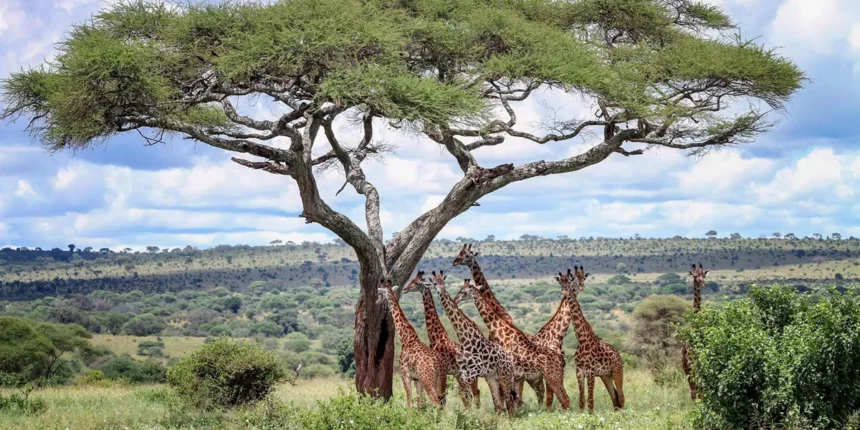
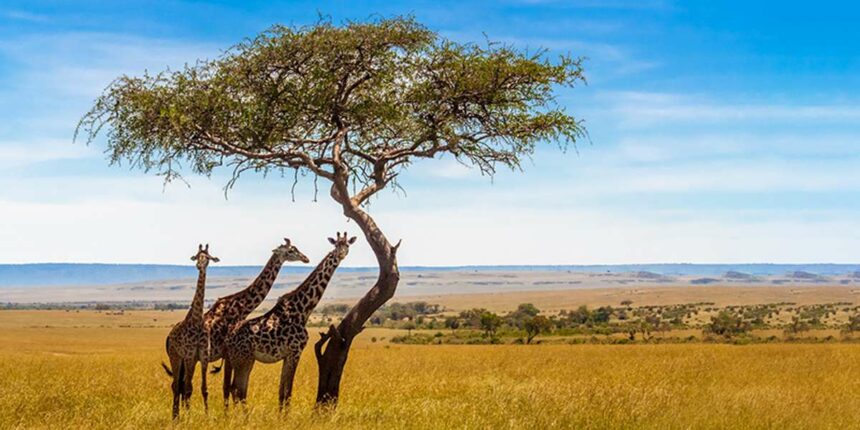
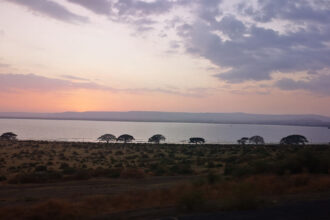
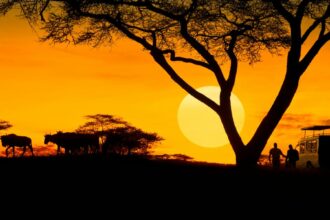
Even though we were still quite a few miles away from Mombasa, I could smell the briny air wafting in from the sea. We had made the nearly 300 mile journey from Nakuru by road. More road hours than we cared to count. Bathroom breaks. Notable scenery changes from the fertile highlands of the Rift Valley, to the savanna grasslands and flat-topped acacia trees of the Tsavo plains.Finally, finally, we approached the wide expanse of the Indian Ocean as we reached the Kenyan Coast.

Image courtesy of ownersdirect.co.ukI returned to Mombasa several times after that first trip as a preteen. The deep blue seas always called out my name and I answered, this love for water bodies having been passed down to me from my forefathers. I’ve stayed both on the North Coast and the South Coast (the city of Mombasa is an island, you see) and found that my heart generally gravitates towards the South Coast.

Driving down the main road in Mombasa, the huge tusks that arch over the street were amazing to behold. That first time, I wondered how big the elephants who had worn those tusks had to have been. Exploring the beautiful, mysterious waters of Malindi National Marine Park in a glass bottomed boat was my favorite experience of all time. So many wonderfully colored species of sea-wildlife: fishes, seahorses, sea urchins. Next time I go, I’ll try scuba diving.

Other places of interest in or near Mombasa include historical monuments (Fort Jesus, Old Town, the Vasco da Gama pillar and the House of Columns–the latter two in Malindi), the Gede ruins, the Haller Park animal sanctuary, spectacular geological formations at Hell’s Kitchen, the flora and fauna around the mouth of River Sabaki, coral reefs, and the Mamba Village, among others.

There’s so much to experience (not merely see) at the Kenyan coast, with the rich blend of cultures from its centuries of history: a conglomeration of Bantu ethnicities, some emigrated watu wa bara (Swahili for “people of the mainland”) and influences of Arabic, Portuguese and British culture. Really, I just couldn’t ever say enough good things about the intensely blue skies and seas, the white sandy beaches and the glorious days of fun possible at the Kenyan coast. No crowded beaches like you find in Western countries. If you haven’t been on a Kenyan beach, you haven’t really lived. So, two words for you: Go! Experience!

Enhanced by Zemanta

Mobile phones in Africa – an interview with Chris Locke of the GSMA Development Fund

The Samsung Omnia i900 Homescreen.

Image via Wikipedia

Chris Locke works for an organisation that represents the interests of nearly 800 of the world’s mobile phone operators. In this interview, he shares his thoughts on Africa’s mobile phones market, the developmental impact mobile tech is having and what he sees as the greatest barrier to bringing the internet to the rural poor.


To start us off, please tell me a little about what you do

I’m the managing director of the development fund at the GSMA. What the development fund does is work with the mobile operator community, our members, and also the development community, such as the Bill and Melinda Gates Foundation, USAID, Rockefeller etc. Looking at how the mobile industry can take development technologies to scale.


So, we concentrate very specifically on how you can take technologies to a country-wide or multi-country-wide level by showing that it is sustainable business for the mobile phone operator. So the mobile operators then play an important role in investing themselves in time and resources to take take those things to a very large number of users.


The exponential growth of mobile phone usage in Africa has been widely reported, particularly the evidence of how parts of the continent have leapfrogged into interesting and complex uses of mobile phone technology. Did GSMA predict or expect that rate of growth?


We hoped to stimulate growth that back in 2005. The very first project of the development fund was a project called Emerging Market Handset. We realised that affordability was a major barrier for people at the base of the pyramid – to get access to mobile phones and therefore benefit from the ways in which a mobile can support you, personally or in your business. What we did was get a bunch of operators to agree to buy in scale then we sent an RFP [request for proposals] to handset manufacturers to say that there will be a significant order from the mobile industry – if they could  get a handset below $30. It needs to be below $30 to be affordable. Motorola won and released a handset that was the first handset that was specifically targeting users at the base of the pyramid and well over 20 million handsets went into the marketplace.


Five to six years ago, we were already stimulating the space but as you say, we’re now in a situation where many countries are leapfrogging. Kenya is always the example people use – there needs to be more case studies than just Kenya – but what you see with M-Pesa is that Kenya is one of the most sophisticated countries in the world  when it comes to using mobile money. And not a small pilot scale, at a massive national scale.


So I think the exciting time we’re in now is that mobile usage has become pretty much the only ubiquitous connected technology at the pyramid and people are now innovating on that as a platform, coming up with services and products which, in many cases, are leapfrogging what we have in more developed countries.


The African Development Bank published a report in May which suggest that one-in-three Africans were now part of the ‘middle class’. Do you think they’ve been accurately labelled and  how could mobile phone usage change?


We’re now seeing, especially with M-Pesa, services specifically built to support entrepreneurship and to support businesses. But even before that, one saw very creative and innovative uses. Jonathan Donner  [an academic who researches the subject of mobile usage in developing countries] wrote a paper in 2004 on the way mobile phones were being used in Rwanda by small businesses in very interesting ways to help them support their business.


So, I think mobiles are being used in ways that is supporting  a new class – I don’t know if I would call them middle class, or if the categorisation works in the same way it does in developed markets – but I think you are certainly seeing a new connected class and a new enabled class.


The thing that’s really going to excite me is when people start using mobile data. I’m always saying to people what I’m looking for is the first game like Angry Birds written by someone in Kampala. Suddenly people have access, with very little overhead, to app platforms that can potentially reach global distribution and have a global source of revenue – for a one or two-person operation. I think the mobile web will bring an entirely new level of innovation in developing markets beyond just outsourcing data processing to countries like India. I think we’ll see a new creativity and a new sense of energy as people get entrepreneurial in the same way as people are entrepreneurial in the [Silicon] valley but in developing markets.


Development tends to be optimistic about what new technology can achieve but so far a lot of the services respond to basic needs, for example, access to market or mobile health. Could the next Silicon Valley really be in Africa?


Absolutely. This is a market of a couple of billion people. Creating mobile data services to serve the needs of Kenyans and Ugandans and Tanzanians is in itself a huge market. I think there are fantastic sustainable businesses that will come out of those countries. I don’t think that it’s a given that the understanding of what those customer needs are will come from the existing large corporations. There is a tremendous opportunity for entrepreneurial innovation in those countries, developed to serve the needs of those communities and I can absolutely see that happening.


Can you be confident of that?


Well, we’re getting to the stage where the tools you need to be able to [reach large markets] are readily available, accessible and affordable. The ideas are also all there in people’s heads, it’s just giving them the opportunity to develop them and launch them.


What about regulation and opening up the market? There were protests in Accra last year about the lack of competitive pricing and poor services from Ghana’s mobile phone operators. Do you intervene on pricing?


We cannot intervene as we are a trade association and are legally forbidden from doing so – we’d be done for anti-trust. However, what we do do, is work with mobile operators on policy. One of the significant aspects of handset and airtime costs in Africa is taxation, so we have worked a lot with regulators and governments. There are many African countries who levy luxury taxes on the most basic mobile phone services and I think mobile has gone beyond being a luxury to a necessity. If luxury taxes were removed, it would improve the affordability of the service.


Tell me a little about the fund’s gender project mWomen. What are the gender implications of mobile phone usage? How do you specifically target women with mobile phone services?


We conducted a piece of research called ‘mobiles and women: a global opportunity’ and what we pointed out first of all was the severe disparity in terms of ownership of mobile phones. We know access is becoming easier and programmes such as Village Phone by the Grameen Foundation, a lot has been done but ownership still remains an obstacle.


Owning a phone gives rural women a sense of autonomy and a sense of identity – often for the first time. There are two reasons for why we think targeting women is a good idea. The first, and in purely commercial terms, is that it’s a big market. We’ve pointed out to the industry that it is a $13 billion opportunity to deliver services to women. But the double bottomline we show in all of our programmes, is that there is then a massive developmental impact as well. In our research we show that women felt more secure if they had a mobile phone, were able to start their own businesses and what we’re seeing is that by encouraging operators – who spend a fortune on marketing, let’s not forget – to recognise women in their communications, there’s also a certain amount of cultural change.


A good example is Roshan in Afghanistan where it is very difficult for women to get a mobile phone. Roshan were very creative and put out marketing targeted at men, explaining to them why it would be beneficial for their households for the women to get a phone. It was hugely successful and increased the number of women on their network from a couple of percentage points to double digits. It is important to understand what the cultural constraints are but also what the cultural impact could be from empowering women.


Another operator we think has a very good programme and we are encouraging people to copy is in India where Uninor have a ‘hand-in-hand’ project which develops centres that are training women in ICT skills, showing women how to use mobile phones to develop businesses and supporting their businesses in other ways. One Uninor beneficiary has gone from starting a small business and through the confidence she’s built, the skills she’s developed and the exposure she’s received, is now running for a position in local government. That’s a single anecdote but it’s indicative of the kind of impact you can have when you’re giving someone a mobile phone. Obviously, the technology alone doesn’t do that but it acts as a catalyst to give someone the ability to have a certain amount of autonomy.


How many operators are enabling women through their phones to alert someone of dangers to their personal safety?


The operator, Cell C,  in South Africa is already do this. One of the aspects of Cell C’s tariff for women is a specific number they can call to report abuse or violence and get access to help.


We don’t mandate to operators the services they should run. What we do is show them the case studies and best practice and they develop what they need for their own market. What Cell C has done with their tarrif is look at what the needs of women are in the local market. Our work is to give them the tools and services to meet those needs.


Has it gotten easier to speak to your stakeholders about the developmental not just the financial benefits of mobile phones?


What drives a lot of the thinking is the market, understandably. We face both ways: explaining to the development industry how the mobile industry can achieve development goals much faster.


The one thing the mobile industry has is scale: both in terms of network and people-reach. There are interesting ways you can use that scale infrastructure. One of our programmes, Community Power, [http://www.gsm.org/our-work/mobile_planet/green_power_for_mobile/4599.htm] recognised that a lot of off-grid base stations produced up to 50% more electricity than they used, so we are working with operators to redistribute that electricity to the local community. Suddenly, you’re distributing power as well as communication.


There is much to be excited about. One of the projects within that programme is looking at vaccine fridges. Vaccines are often spoiled due to a lack of refrigeration. We have 680,000 off-grid base stations around the world, many in areas where vaccines are spoiled. So projects are looking at connecting fridges to the base stations, using the excess power – a cheap form of electricity that currently is being wasted. This will then have a massive impact on reducing spoilage of vaccines and in turn improving health outcomes.


Viom Networks, in India, is going one step further and putting in along with the fridges, computers linked to local governance sites, charging stations and health centres. These centres  have become a development army knife of sorts.


Switching direction somewhat, mobile phones have in part become the new way for organising and communicating protests, with anxious governments putting pressure on mobile phone operators to suspend services – as MTN Cameroon was temporarily forced to do in March. Do you advise your members on best-practice during times of civil unrest? And how does the foundation negotiate being both a development fund and a business proposition?


I can’t comment on that. We’re an apolitical trade association and we’re there to support the industry to launch services that we know have  development impact but we don’t have a political agenda.


Finally, what then does the future hold? Are there any challenges that might change the growth trajectory?


Both the opportunity and the difficulty is in mobile data. I think there is huge potential there as we’ll genuinely be giving people access to one of the best inventions of the human race, the internet. Giving those at the base of the pyramid, who have been information-poor, suddenly access to information in an affordable way will just be incredible. But you never know what might happen and that’s what makes it exciting. Listening to and watching this innovation develop over the next few years is going to be a phenomenal thing.


But ultimately, the massive barrier to that is literacy. And what do you do about that? We’re seeing the price of handsets and smart phones dropping and we seeing the price of access to data also dropping but if we still have massive illiterate populations, they will certainly not benefit.

Enhanced by Zemanta

HIV Transmission Through Medical Procedures in Africa

Main symptoms of acute HIV infection. Sources ...

Image via Wikipedia


Even back in the 1980s, not long after HIV was identified as the virus that caused AIDS, medical transmission was recognised as one of the possible modes of transmission.

[http://sites.google.com/site/davidgisselquist/pointstoconsider] Some important research went into establishing the extent of unsafe medical practices and the results suggested that these practices could transmit HIV very rapidly.

As a result of this research the possibility of medical transmission was all but eliminated in Western countries. But virtually no research was carried out to establish the contribution of this kind of transmission in African countries.

WHO, various UN agencies, leaders of all descriptions, professionals of all descriptions, various globally represented organisations, institutions, universities and others flew the flag for heterosexual transmission of HIV in developing countries (though not in developed countries).

The few exceptions to this were considered to be denialists or trouble makers. There are still few exceptions and they are still quickly branded and dismissed by the HIV industry elite. [http://ijsa.rsmjournals.com/cgi/content/abstract/20/12/812]

Well, maybe medical transmission of HIV is not very high; maybe it is lower than heterosexual transmission. Maybe all the fuss is about nothing and maybe I’m just one more person poking his nose in where it doesn’t belong.

But we are entitled to know why medical transmission of HIV has not been properly investigated, why it is still dismissed as being almost non-existent. The recently published (though based on out of date data) Modes of Transmission Survey for Kenya suggests that medical transmission accounts for 0.6% of all transmission, based on an assumption that seems to have been pulled out of thin air. [http://www.unaidsrstesa.org/files/MoT_0.pdf]

The same survey notes a finding that puts the rate at 2%, over three times higher. But this is still dwarfed by most of the other modes of transmission, especially heterosexual transmission. And even 2% sounds ridiculously low.

But those who are still being branded as mavericks for questioning the received view point to many bodies of data that have managed to investigate medical transmission rates of HIV. [http://sites.google.com/site/davidgisselquist/pointstoconsider]

Those bodies of data show that medical transmission is extremely significant, perhaps even more significant than any other mode of transmission, including heterosexual transmission.

All the dissenters are asking is that these results be taken seriously and subjected to rigorous testing. [http://ijsa.rsmjournals.com/cgi/content/citation/20/1/69r] If medical transmission of HIV even stands at 5%, this would still account for millions of people currently living with HIV and hundreds of thousands of people who have died of HIV.

One of the most heartrending things about people dying of HIV, as opposed to other diseases, is that they are, because of the unexamined and long held assumptions of so many ‘brilliant minds’, vilified, ridiculed, shunned, persecuted, sneered at and humiliated just when they are in most need of sympathy, love and basic humanity.

If it is even remotely possible that we as people are guilty of such terrible injustice to fellow human beings, surely that is in urgent need of investigation? Far from dying because they have engaged in what may or may not be risky sexual activity, people may be dying because they have followed the advice of well educated professionals.

It’s almost unthinkable that many, or even any recent cases of HIV have been transmitted by the very professionals that are supposed to be preventing and treating the disease. But it is even more unthinkable that we could suspect such a thing is happening and do nothing about it.

Maybe there is a danger that people will stop going to health professionals and stop seeking medical treatment, even vital vaccinations and life saving treatment, because of a complete lack of confidence in the profession. But that is something the profession will have to deal with because they certainly don’t deserve any confidence or respect until they have fulfilled obligations that have so long been outstanding.

It is possible that in some countries, going to the doctor may curently be a significant health hazard, carrying risks of infection with HIV and many other blood borne diseases. In the field of HIV, nothing is more important right now than establishing the extent of HIV transmission through medical treatment.


Guesst Post from Simon Collery: I am campaigning for the recognition of non-sexually transmitted HIV, which may be a significant contributor to some of the most serious epidemics, which are all in sub-Saharan Africa. The extent of non-sexual HIV transmission is unknown because no comprehensive investigations have been carried out. But there is a lot of evidence against the view that sexual behavior alone can explain the massive epidemics found in countries such as Swaziland, Botswana and South Africa. While I do blog about other subjects relating to Africa, this is my main concern.

Enhanced by Zemanta

How cheap life can be

Slum Kibera in Nairobi, Kenya.

Image via Wikipedia

Over the month of October, watching news in kenya has been the equivalent of a serialised horror movie. every day there is news of  a grisly road accident, a couple of people going blind due to drinking toxic concoctions in the name of alcohol and  fuel pipelines incinerating slum dwellers.

The Sinai slum tragedy has claimed over a hundred lives. Information has leaked that it could have been avoided if the right measures like evicting the slum dwellers, fixing a faulty seal in the pipeline and proper deterrence for stealing fuel were implemented years ago. But ofcourse politicians would hear non of this seeing as the voter gravy train would grow alittle thin if the slum was moved to say the next constituency.

Almost 200 people die monthly on Kenyan roads mostly due to negligence and drunk driving. Some accidents are so grisly and cost so many lives that even the president attended a burial in Mwingi due to the sheer loss. barely a week later a similar accident on the same route claimed a similar no.

Tales of drinkers going blind due to drinking some illicit brew are fast becoming regular such that its no longer news. This is even beyond the fact that a law was enacted recently to control exactly this kind of behavior.

To date no one has resigned, been suspended,fired or arrested for being responsible for any of the above tragedies. In my view this cheapens the lives lost to some sort of collateral damage that is acceptable.

When does it end?

Enhanced by Zemanta

Food security and the impact of agriculture commercialisation

CIA World Factbook map of the country of Uganda.

Image via Wikipedia

In early part of 2009, shortly before March the 13th, the impact of industrialisation in Africa sore its seed during an intense contemplatation program set up to look at ways of promoting for food security in Africa. I (even though not an agriculaturist) and perhaps quite a number of persons; perceived an incoming industrial revolution in Africa that might pose a significant threat to agricultural advancement if government policy goes negatively unchecked. Let me make it clear that I do accept that industrialisation is great; it will allow Africa a bigger room in the goods and service market of the world. It will engulf as well enable agriculture with a lot of great prospects as agro-industries might receive a greater attention of government and both domestic and foreign investors as is already happening in Zambia and Rwanda. Both small scale and large scale commercial agriculture will be the drive for both the young and old. Industrialization will also help African countries trade among one another in a unique way. This is because, most countries in Africa have almost the same commodity type; from agricultural resources to mineral resources. For instance, Uganda would not sell coffee beans to Kenya and vice versa because they both produce it on commercial quantities. However, the story can greatly change if Uganda’s coffee is taken through an industrial process and well processed and packaged branded coffee is produced out of it.  I am biased in stating that Uganda’s coffee is the best in Africa; the government and private sector actors in Kenya might readily patronize a lot of Uganda coffee but will not do same for Uganda’s coffee beans because Kenya is the leading exporter of coffee in Africa. These are some positive externalities of industrialization.

Many governments in Africa have pursued industrialization vigorously as part of their developmental plan over the decades. This has given rise to a lot of commercial agriculture where agro-industries are concerned. As a result, larger lands (arable lands) has been dedicated to industries. But, we all know that the greater percentage of the food provided the continent comes from indigenous Africans who own smaller farm lands. Now, imagine if the same size of arable lands allocated to factories are given to farmers whose desire is to invest their energies and time in large scale subsistence farming. It is subsistence farming that feeds Africa but when large scale commercial farming comes in, factories to process the cash crops cultivated on this commercial farms for exports will be a necessity. The question is: Will Africa export food whereas over 200million people of its people are chronically undernourished? Africa spends over $18billion on food importation; this means, greater percentage of the monies derived from Africa’s food exports are used to buy food into Africa again, sometimes with costs higher than what it earns during export. The reality is that, the dependency theory always works against Africa, farm inputs are heavily subsidized for farmers in most of the countries outside of the continent we directly trade with. Hence, African agriculture will have to decrease the prices of her commodities so they can get a market for the foods exported.

Advantages:

This is where industrialization provokes a positive externality, where it embraces processed foods, some for export and some for domestic consumption. This will greatly help decrease a lot of processed foods imported. But, when industrialization completely shifts from agriculture into the manufacturing goods and services there will be a threat of an intense state of food insecurity. In Africa, it is only prospects for food security that was not dated among all of the things stated in the financial times of 2003; 9th July (read Financial Times, July 9, 2003; p.1). It is said that over 500 children die of malnutrition every day and the situation is worsening.

Disadvantages:

The negative externalities of industrialization are many but the significant among them, to me, are global warming and the provocation of acid rains it will command upon African soils.  Africa already lies at the heart of the over-head sun. Emission of more Carbon dioxide gasses into its atmosphere will spell disaster. The depletion of the Ozone layer will make the situation unbearable for some crops to thrive as well as dehydrate farmers who use their natural energies to farm. Many children suffering from malnutrition, especially diarrhoea, are at greater risk since they lose too much energy. Smaller streams that naturally irrigate certain farms lands dry up as well as rivers and other important water bodies useful for irrigational purposes. This is already evidenced in parts of Africa (experiencing famines or threat of famines) where there has been political instability coupled with the extreme unforgiving weather patterns such as in the Horn of Africa.

Secondly, poisonous gases emitted to the atmosphere from industries will induce acid rains, rich in sulfur and other chemicals, upon soils. Microorganisms that should add nutrients into the soil will eventually die; the only option will rest upon fertilizer usage, especially inorganic fertilizers, which is equally a disaster. A lot of inorganic materials in the body will pose health risk and many will die from food related diseases because Africa’s health systems are so weak to cater well for the sick. Furthermore; additional monies will be spent on fertilizer importation, causing losses to Africa’s foreign currency reserves and consequently sky-rocketing food prices. Already, most of the humus layers of Africa’s agricultural soils have been completely destroyed by ploughs whose blades are several inches larger than the thickness of the humus layer. For example, in Uganda, the humus layer is about six inches thick so when you use ploughs with disk sizes of say, 26 or 32 inches on Uganda’s soil, you will actually be burrying the micro-organisms deep down leaving no nutrients to be absorbed by plants. This will result in more money being spent on the importation of inorganic fertilizers. Many farmers who cannot afford the high cost of production will subsequently move out of business. In 2008, the Algerian government invested $10billion into agriculture and it yielded great dividends, this is to tell you how risky the venture is. Therefore, since agriculture is such a risky venture (a reason that scares most African government away from investing heavily into it) we must not further heighten the risk by imposing unmanageable factors on it.

There must be a limit for things we do. Food security is paramount. African leaders must not allow themselves to be driven by this proclivity for modernity to the degree where all they care about is GDP growth rather than strengthening local food reserves. For most of these leaders, growth in GDP means an opportunity to attract more inter-governmental financial aid in-flows from the Western countries that never gets to the African people.

Enhanced by Zemanta

It is time Africans embraced Twitter

Free twitter badge

Image via Wikipedia

Twitter is a micro blogging site that allows you to answer questions like “how are you?”, “Where have you been?”, “When are the #notw (News of The world) bosses being questioned?” by sending short text messages in only 140 characters in length called tweets to your followers. Your tweets are displayed on your profile page, on the home page of each of your followers.

While the rest of the world has really taken to twitter, Africa is still lagging behind. Don’t give me the excuse of having no internet connection (this goes out to you who has the connection) If you are able to access facebook, you will be able to access twitter. Some African countries are really out there voicing their opinions and others are not. I tweeted this yesterday after noticing that not many Rwandese are on twitter and like many others if they are, they just open an account and never use it.  “I love seeing how other nationalities in Africa are really taking to twitter … voices are being heard! Where are the Rwandese??? *smh*” (smh – shaking my head).  When I used to tweet for @BeautyofRwanda, I constantly used the hashtag #OnlyOneBasket. (A hashtag (#) is used when you want to mark a key word or topics in a tweet) @BeautyofRwanda’s hashtag tells you of the campaign to help women in Rwanda who are weaving baskets in order to get themselves and their children out of poverty. It made people want to know more about the campaign which is what I wanted in the first place.

Voices are being heard through twitter even though the governments and other organisations might not do much about it but at least there is a platform to voice your concerns. Oh! There was Egypt…remember? I now know that #umeme from Uganda is really pissing people off. I get to read the funniest tweets about this topic but I would like to see the end of it because I know that Ugandans are not happy about the electricity load shedding happening in their country. What is going to be done about that? Many wonder. I also now know #malema, one of the topics in South Africa. I didn’t know who he was or what he was about but twitter made it my business to know. One cannot also forget that earlier this year when #Jan25 was the hot topic worldwide. I followed the Egyptian revolution via my time line on twitter from anywhere I was as long as I had access to the internet. Amazing!

“Twitter provides relief from rising email and IM fatigue”

Yesterday 02 of August, I came across a hashtag that Kenyans are using to highlight the plight of the famine in their country – #Kenya4Kenyans. If you follow that hashtag or any other, you get to find out what people are saying about that particular topic. The Kenyan hashtag has united Kenyans and is helping raise funds to help those facing imminent death due to the famine. You get to find out where and how to send donations and lots more. Kenyans should be proud of themselves because I, Africa and the rest of the twitter world are proud of you!

What I am trying to get at here is that we Africans have been given a platform where anyone anywhere in the world is capable of reading your tweet and replying to it. Taking advantage of this tool should be a priority. Only we can help ourselves. While some are using this platform to personally promote themselves without engaging with their followers others are putting it to good use. We are being provided with information that is good for us, however bad it might be, as long as it’s in the public interest then we want to know. Instead of sitting there moaning about this and that, get out there and do something about it. If you don’t tweet about it we won’t know that it is bothering you. It might as well not exist!

Enhanced by Zemanta

Drought and Famine : Surprise or Expected?

Location of East Africa Protectorate

Image via Wikipedia

Once again as is usual in this part of the world (East Africa), there is famine brought on by the Drought that has ravaged Northern kenya and Somalia. As a result refugees pour into Ethiopia and Kenyan camps the largest being the one in Daadab east of Garissa in Eastern Kenya. This happens year in year out and has spun an industry consisting of a constellation of International and local NGOs, aid agencies and all manner of expatriates coming to “help the poor”.

In all honesty this has no end in sight since it is all reactionary. Next year we will be right here with the media peddling images of emaciated children with flies in their mouths and eyes to coax that money out of your wallet and into the newest aid agency on the block which probably got to you through Twitter. It does nothing to adress the root cause of why these guys are dying of hunger and how to solve it.

No-one talks of the fact that these people are mainly pastoralists, a culture that should have ended in the last century. Relying on cattle for sustenance is fine when there is endless pastureland and watering holes. but what happens when the sky doesnt open up for months and the pastureland turns to miles upon miles of dust and rocks? They beg for Aid, that’s what they do. I have fasted for a week so I know what it is like to sleep and wake up hungry. I am in no way belittling what they go through but setting yourself up for a failure whether knowingly or not has the same outcome year in year out. That way of life is not sustainable. everyone knows it. But nobody says it.

The Kenyan government rushes every time the area starts getting bad press and international investors start wondering if their investment is safe in a starving country. It is declared a national disaster and the begging bowls come out of the closet. Its despicable.


Mark

Enhanced by Zemanta

To Whom It May Concern: Famine at the Horn Of Africa

A letter to the Editor from The African Future  Global Enrichment Foundation  Hope for Nations


Over the past few weeks an emergency has unfolded on the Horn of Africa. Facing the worst drought in over 60 years, the people of Somalia are experiencing massive crop and livestock failures, rapidly diminishing access to drinking water and the chaos associated with internal displacement and civil strife. The United Nations has declared a famine in Somalia, a term reserved for only the most desperate food shortages.

Refugee camps on the borders of Somalia are filling up at rates unseen in decades. The people arriving are emaciated, having trekked for 20-24 days through the sweltering heat of the African desert. Unfortunately, many of them starve to death on the journey most of them under 5. This disaster has been declared the “children’s famine”.

The conditions inside the refugee camps are grim, however the people who arrive at these camps are fortunate because they will have life-saving access to food, water and medical attention. The people who really need our help are still trapped in southern Somalia. The United Nations has estimated that 10 million people now face the prospect of starvation in Somalia, with reports of tens of thousands already dead.

It is critical that the international community respond with food aid immediately. The last famine in Somalia in 1991-­‐1993 resulted in 500,000 deaths. We now face a catastrophe that can result in twice as many deaths, with the possibility to extinct an entire generation. Close to 800,000 children in Somalia are at risk of imminent death if assistance does not reach the country urgently.


Emergency Food Convoy into Somalia

 The African Future, The Global Enrichment Foundation and Hope for the Nations are working on a rapid response to this situation. Trucks full of emergency food aid will leave from Nairobi, Kenya for Dhoobley, Somalia on July 30, 2011 with a goal of feeding 50,000 people. The food baskets distributed will feed a family of 5 for two weeks.

The food will reach Somali’s who are walking to the refugee camps in Kenya, giving them sustenance to complete the journey. This will be one of the first major food deliveries into the area since the declaration of a famine. The cost of

the convoy is $300,000 USD. All implementing partners are operating with NO overhead costs. We anticipate significant media attention given to this food convoy and major sponsors will be identified.

Tax receipts are available for all donations in the United States and Canada. For more information go to: www.theafricanfuture.org/blog

The delivery of this food is literally the difference between life and death for its recipients. Stand in solidarity with communities in need, and bear witness to their strength.

If you have any questions, please contact:

Hibe Kalfan

+1 703 581 7708

hibe@theafricanfuture.org

Thank you for your time.


Enhanced by Zemanta

The Right Kind of Aid II: East African Drought Crisis

Map of Africa, Samuel Mitchell - 1867, Philade...

Image via Wikipedia

Guest Blog from Tomás Ó Ceallaigh


Anyone with a heart, or even a scrap of interest in their fellow human beings, will find it hard not to have been moved by the recent scenes of hunger and desolation coming from the Horn of Africa. Countries such as Somalia, Kenya, Tanzania, Uganda, Djibouti, Ethiopia and Sudan are having all been affected in some way by an immense drought that has it the region. Eritrea may also be affected, but according to the UK Government’s Department for International Development (DFID) data is hard to come by there. At a time like this the support of a foreign government towards an affected group of people shows the great degree of compassion that people can show to their brothers and sisters around the world.

Indeed, it can go some way towards restoring my faith in humanity – especially where the Western powers are involved. In this spirit, on the 6th July, the UK Government stated that the size of their assistance will run to £38 million pounds (just under $61 million at mid-market rates) which, according to DFID is going to Ethiopia. This money is designed to assist the 3.2 million people who DFID believe to be at risk there and will be enough to feed “1.2 million people for three months” (DFID, 2011).On the 6th July, Andrew Mitchell, MP for International Development, added, that “the UK has also provided strong support for Kenya and for Somalia in the last financial year, funding emergency nutrition, health, water and sanitation and livelihood support activities.”

Why is it then that, in spite of this great act of kindness from one government to another, that I feel a little uneasy? The answer lies in the way in which foreign aid is dealt with. Questions that come to mind include: how is this to be distributed? Who is going to be responsible for its distribution? What measures are going to be put into place to prevent a similar crisis from happening again in order to ensure the long term ‘food security’ of East African people?

Some of the biggest problems with foreign aid are the strings that can come attached. In the case of the Horn of Africa crisis, DFID hasn’t made clear, publically at least, of any stipulation for the aid being sent to Ethiopia. This is not always the case. In 2005 the US government pledged $15 million over five years to fight AIDS – the conditions were that money would go primarily to pro-abstinence programmes and steer clear of clinics offering abortions (Moyo, 2009).

Then there is also the risk of aid getting into the wrong hands. According to Dr Adwok Nyaba, the SPLA – to some a rebel militia group, to others Southern Sudan’s de facto military until independence last week – had been diverting food aid away from the needy. He said, “[S]ince humanitarian assistance is only provided for the needy civil population, the task of distribution of this assistance fell on specially selected SPLA officers and men who saw to it that the bulk of the supplies went to the army” (ESPAC, 1998). The net result of this meaning that suffering citizens are left wanting.

So how can we work with aid to ensure that it gets to those who need it the most? It is a difficult question, especially when you are dealing with food and unstable regimes. In the case of Somalia the people have not only food security to worry about, but their own physical safety too in a country where the government is seen as practically ineffective. Al-Shabaab did state on the 6th April (BBC, 2011) that they would allow food aid in, but how far can they and will they be trusted to not use the relief aid as a weapon against their own people?

Ultimately, programmes to manage the distribution of aid have to be loosely co-ordinated by an overseeing body, the UN for example, but I feel that in as many cases as possible governmental involvement should be kept to a minimum. The responsibility of ensuring people can survive these testing times should lie with good-intentioned NGOs. The governments should be busy in the meantime coming up with strategies to ensure that this kind of humanitarian devastation does not happen again.

Simply providing a lump-sum of money to a foreign government will not do. Simply providing bags of grain to a government to pass on to its people will not do. Well-managed distribution of food, by groups free from political bias, religious bias and desire to ruthlessly profiteer from the vulnerable, acting independently of governmental interference is the only way. Even then, this should only happen as a starting point in a longer-term strategy to deal with firstly the refugee crisis growing in northern Kenya as a result of the Somali civil war and secondly the food security of the people of the Horn of Africa region.

How this can be achieved, with all of the world’s nations’ vested interests, I do not know. It is my sincerest hope that the money pledged to Ethiopia by DFID will be managed in a way that only benefits the people who actually need the assistance – not people looking to make money off the destitute. I also hope that this money is free from any political terms and conditions.

As for the other countries affected, I hope that suitable donors will come forward to assist in their management and survival through this potential catastrophe, but we must all recognise that, as people who love and care for Africa, as people who have Africa running through our veins, it is partly our responsibility to hold rogue elements to account whilst ensuring the survival and eventual flourishing of our brothers and sisters who may currently be suffering in East Africa.
Tomás

Enhanced by Zemanta

Corruption in Africa

Corruption in Africa can be overcome. Period.  How? By having outstanding leaders in the community. This can only be achieved if we start at the grassroots level. In other words, with our children. The right upbringing for a child brings wonders to the child themselves, family, community, country and Africa at large.

Today Africa is covered with corrupt leaders. Not a day goes by during which you don’t read something about how corrupt the continent of Africa and its leaders are, from the “little” leader at school to the “big” leader of a country. The citizens of the continent of Africa are forced to pay bribes left, right and centre in order to get by. So, with money, however little it might be, and as long as you are willing to part with it, there is very little that you can’t achieve.  If you can afford it, you can go a long way. To the poor who can’t, their fate is forever sealed. Unfortunately, the latter are the majority. With this happening each and every day of their lives, how does one expect the poor to ever develop?

Corruption in Africa has been going on for centuries, even during the slave trade when the traditional rulers would sell their own people for their own interest.  Since then nothing has really changed. It is just that, due to Western infiltration, Africans are becoming more educated and thus aware of this foul play. Most African leaders are power hungry and greedy. When they come into a leadership role they put themselves and their immediate family first rather than the interests of the country. They forget that they are there to serve us – the people who put them in that position in the first place and the same people who can bring them down too. I don’t have to name any names because you already know who they are.

Can it also be argued that most African leaders are bound to be corrupt because of the poor background they come from? Many steal as much wealth and plunder as many assets as they can before they are deposed from power. Whatever the case, it does not give them the right to oppress the poor by making themselves richer at the expense of everyone else.  What happened to throwing someone a little bone, or you scratch my back and I will scratch yours? (I am not encouraging this.) What about sharing? After all, that land that you are stealing from is my land too!

Corruption in Third World countries will be very difficult to eradicate if the mentality and the perception of the people and leaders does not change. A solution to this problem, I think, should be to allow every leader a maximum of two terms in office because the longer they stay in power, the more they instill fear and oppress their people.

So to reiterate, corruption in Africa can be overcome by having outstanding leaders in the community, starting with our children.

Without a more rapid change, it will take Africa another century to eradicate corruption that has become so embedded within our society.


Enhanced by Zemanta